
How to Divide a Room Without a Wall Using Smart Ideas
Staring at a big, empty room can be daunting. It feels like a blank canvas with too many possibilities, but the last thing you want to do is call a contractor. The best way to divide a room without a wall is often the simplest: using what you already have—or can easily get—like furniture, a new shelving unit, or even some well-placed curtains to carve out functional zones. You get the structure you need without losing that airy, open feeling.
Rethinking Your Space Beyond Permanent Walls
We all love the idea of open-plan living. It feels modern and spacious. But in reality, when your living room, dining table, and home office are all one big free-for-all, it can get messy and chaotic. The trick is to create "visual separation." You're essentially giving your brain subtle hints about where one part of the room ends and another begins.
This isn't just about looking good; it's a practical shift driven by how we live now. Think about it: the global room divider market soared to USD 2,514.5 million in 2024. That's not a coincidence. With so many people working from home, there's a huge demand for flexible, non-permanent ways to create a dedicated office space. People want solutions that adapt to their lives, not expensive, permanent construction.
Defining Your Zones With a Plan
Before you start dragging furniture around, take a moment to plan. This is the core of what is space planning. You need a clear map of what you want to achieve. Start by asking a few simple questions:
What am I doing in this space? Do you need a quiet corner for reading? A dedicated spot for your Peloton? A safe play area for the kids?
How do people move through the room? Make sure you leave clear, logical pathways. You don't want to create an obstacle course.
Where's the light coming from? The goal is to work with the natural light, not block it with a giant bookcase.
This decision tree gives you a great starting point for figuring out if you need a real physical barrier or just a strong visual cue.
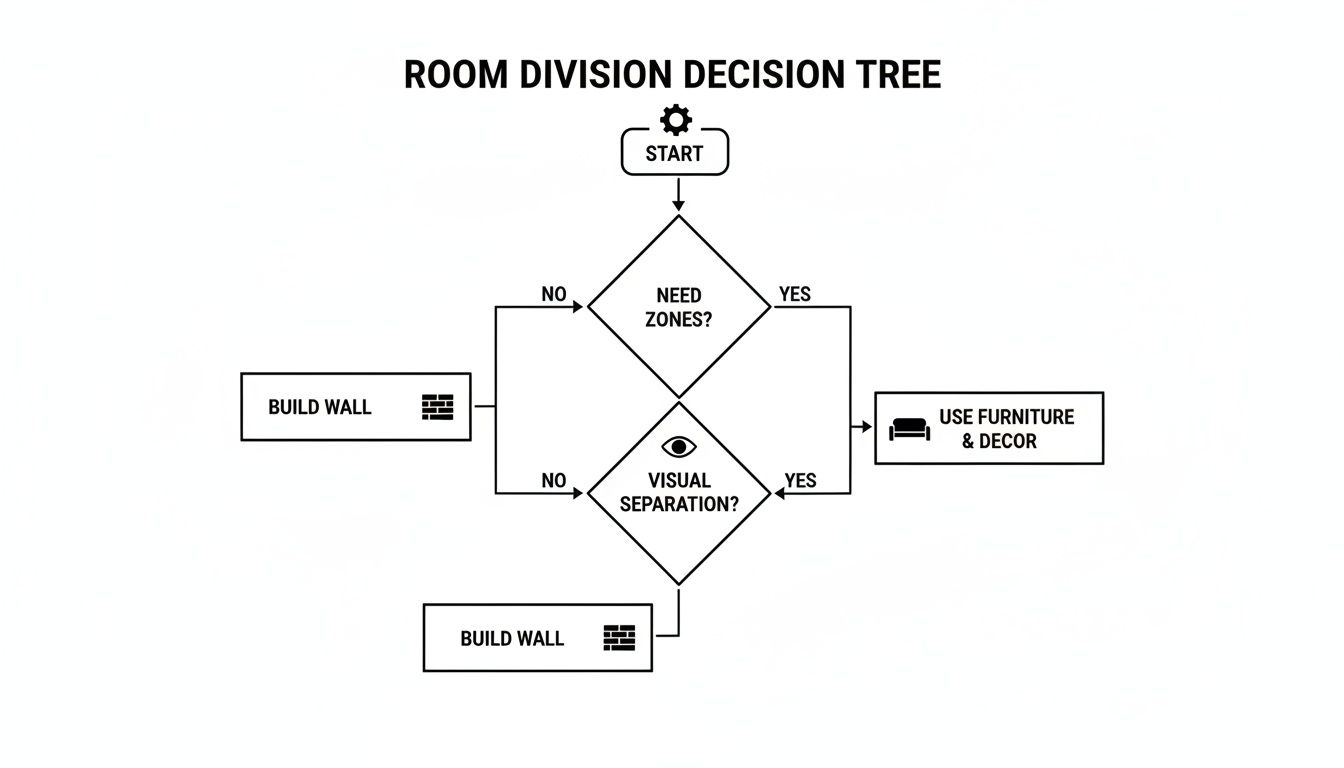
As you can see, most of the time, all you really need is that visual separation. A cleverly placed piece of furniture or a rug is often more than enough.
Key Takeaway: The best room divisions feel intentional, not like an afterthought. They solve a real problem—like creating a bit of privacy for Zoom calls—while actually making the whole room look better.
The good news is you don't have to rely on guesswork anymore. With AI Home Design tools, you can upload a photo of your room and experiment with different dividers and layouts. It’s a fantastic way to see what works before you spend a dime or lift a finger. For some great ideas, check out our guide on creating zones at https://decor8.ai/rooms/open-plan.
Dividing Rooms With Furniture You Already Own
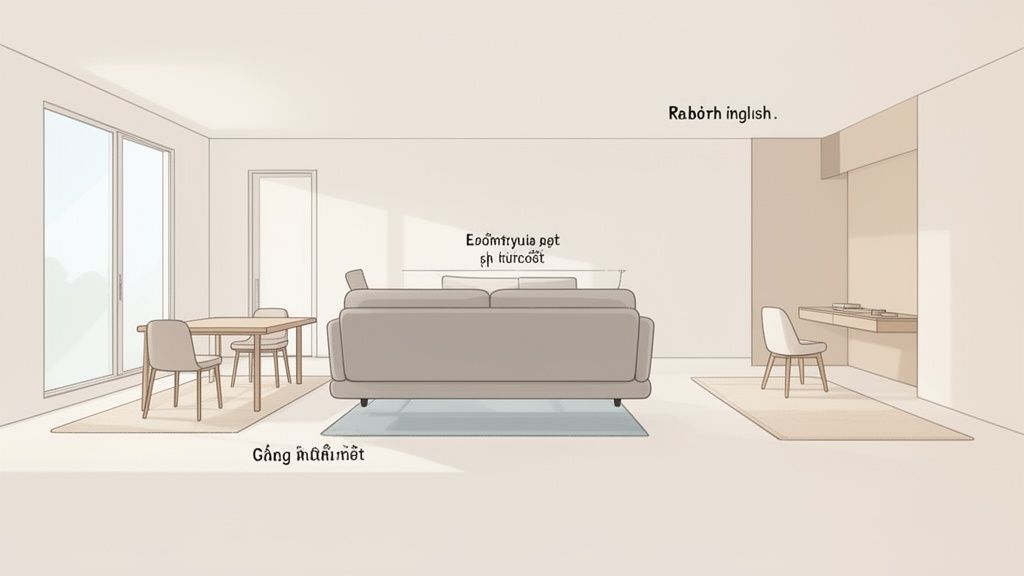
Sometimes the best way to divide a room is already hiding in plain sight. Using the furniture you already have isn't just a great way to save money; it's a clever design trick for creating distinct, functional zones without making the space feel cluttered. The secret is to stop hugging the walls with your furniture and start thinking of each piece as a potential border.
The sofa is a perfect example. We have a natural instinct to push it up against a wall, but by "floating" it in the middle of the room, you can work magic. Turning the back of the sofa toward a dining area or a home office nook instantly draws a line in the sand. This one simple move tells everyone, "This is the living room," and "That is a separate space."
Creating Clear Layouts for Common Spaces
This furniture-first strategy is a lifesaver in all sorts of layouts. Think about a studio apartment or a long, narrow living room. You can easily separate your sleeping area from your living space with a low console table or even your desk. Just place it at the foot of the bed, and it creates a subtle barrier that acts like a headboard on one side and the beginning of your living zone on the other.
This works just as well for open-plan living and dining areas. Use the sofa to outline the lounge space, then place a long, slim console table right behind it. This creates a sort of implied hallway and gives you a great spot for a couple of lamps or some plants, reinforcing that the dining and living spaces are two separate entities.
Pro Tip: The fastest way to solidify these new zones is with area rugs. Placing one rug under your living room furniture and another under the dining table visually anchors each area, making them feel like distinct "rooms" within the larger open space.
Strategic Placement for Maximum Impact
It’s not just about sofas and tables, either. Almost any piece can be used to carve out a new zone. If you turn a desk perpendicular to the wall, you can create a productive home office nook right in a corner of your bedroom or living room. The desk itself acts as a kind of half-wall, giving you a sense of enclosure and focus without killing the light or flow.
Here are a few other practical ideas to get you started:
Carve out a reading nook: In an empty corner, place a comfy armchair and a small side table, angling them slightly inward. Add a tall floor lamp right next to the chair, and you’ve created a cozy, self-contained spot.
Define an entryway: Does your front door open straight into the living room? Place a bench or a narrow console table a few feet away from the door. This creates a makeshift foyer—a perfect drop zone for keys, mail, and shoes.
Visualize before you move: Let's be honest, shuffling heavy furniture around is no fun. An AI Room Design tool is a game-changer here. You can snap a photo of your room, upload it, and play around with different furniture arrangements virtually. See exactly how that floating sofa or angled desk will look before you break a sweat.
Ultimately, using furniture to divide a room is all about creating purpose. You’re guiding people through the space and giving each zone a clear job, transforming one big, undefined room into a multi-functional home that feels organized and intentional. For more layout ideas, check out these modern living room ideas.
Using Creative and Structural Room Dividers
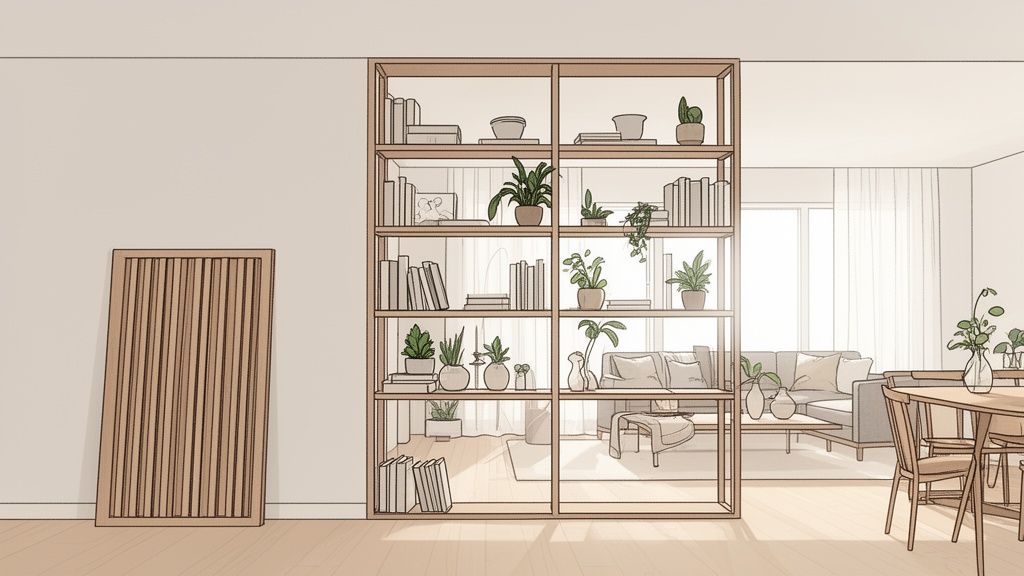
When you're ready to move beyond just arranging furniture, you enter the world of dedicated room dividers. These pieces bring architectural flair and clear purpose to your space. Think of them as the perfect middle ground—more permanent than a couch, but way more flexible than putting up drywall.
Open-back bookcases are a timeless and incredibly effective choice. They create a semi-transparent wall that defines a zone without cutting off light or conversation. The real trick is in the styling. A thoughtful mix of books, plants, and your favorite objects will keep it feeling airy, not like a solid barrier. Plus, you get a ton of storage and display space, which is always a win.
The Power of Soft and Flexible Dividers
For a gentler, more fluid approach, curtains and folding screens are your best friends. You can install a ceiling-mounted track and hang a fabric "wall" to create a guest space on the fly or simply hide a messy home office after 5 PM. The fabric itself makes a huge difference—sheer linen keeps things bright, while heavy velvet adds drama and real privacy.
Folding screens are even more adaptable. You can move them around in seconds, which is a lifesaver for renters or anyone who loves to redecorate often. A simple three-panel screen can easily carve out a cozy reading nook, while a large, ornate one can double as a stunning piece of art.
Expert Insight: Always think about a divider's visual weight. A dark, solid screen will feel heavy and imposing. A light-colored, open-weave one will define the space without closing it in. The goal is to suggest a boundary, not build a fortress.
Exploring More Structural Solutions
If you're craving something that feels a bit more built-in, slatted wood partitions are a fantastic modern option. These vertical slats draw a strong visual line, neatly separating an entryway from a living room, for example. But because of the gaps between them, the room still feels open and connected. It’s a great way to add warmth, texture, and a high-design feel.
Partial glass panels are another great semi-permanent solution. Usually framed in black metal for a modern or industrial vibe, they're perfect for sectioning off a home office. You get excellent sound dampening without losing any light or sightlines, which keeps the room from feeling cramped. For a more robust, all-in-one solution, you can even look into innovative interior pods that offer a self-contained office or quiet zone.
Matching Dividers to Your Home's Style
Your divider should feel like it belongs in your home, so make sure its material and style match your existing decor. A bamboo folding screen might be perfect for a bohemian room, while a sleek metal-and-glass partition feels right at home in a minimalist space.
Here are a few ideas to get you started:
Modern: Think open-back metal shelving, slatted wood panels, or clear glass.
Bohemian: Try macrame hangings, beaded curtains, or a rattan folding screen.
Traditional: An ornate, carved wood screen or a classic bookcase never fails.
Industrial: Go for black-framed glass panels or dividers made from reclaimed wood and pipes.
This isn't just a trend for homes; it's completely reshaping offices, too. As hybrid work becomes the norm, the market for commercial dividers is expected to hit USD 1,308.62 million by 2031. With 80% of companies shifting to flexible office layouts, these non-permanent partitions are the key to creating adaptable workspaces.
Not sure which divider will look best in your room? Using an AI Virtual Staging tool is a game-changer. It lets you experiment with different options to see how they affect your room's light and flow before you spend a dime. Check out these virtual staging examples at https://decor8.ai/virtual-staging/examples to see how you can test your ideas and bring your vision to life.
Creating Zones With Light and Color
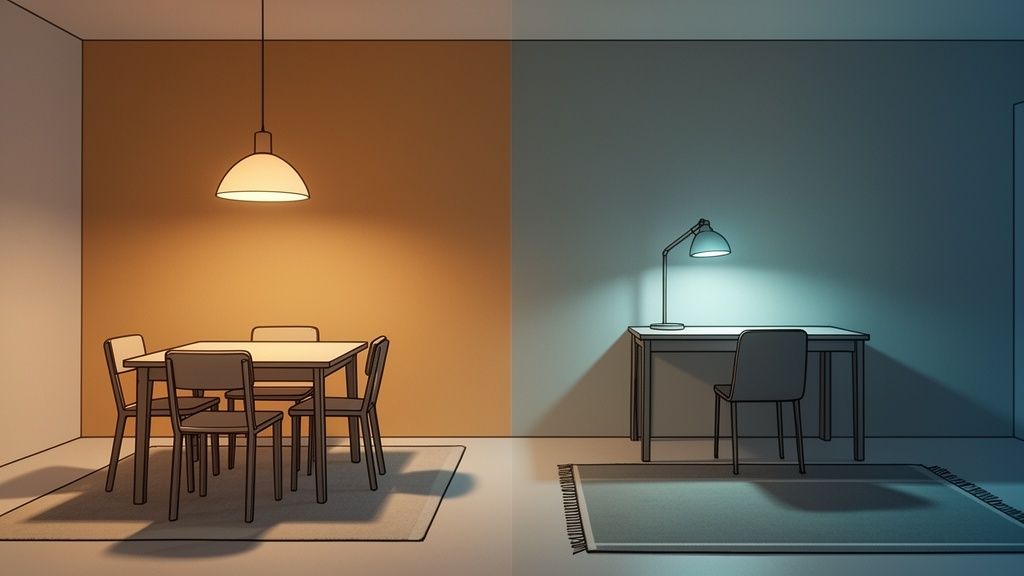
Sometimes the best room dividers aren't physical objects at all. You can create incredibly effective, distinct zones just by using the subtle power of light and color. It's a clever and often budget-friendly way to make a big visual statement without adding any clutter.
Light is one of my favorite tools for signaling a shift in a room's purpose. Think about hanging a bold, low-slung pendant light directly over your dining table. That single fixture creates a focused, warm pool of light that instantly makes the area feel intimate and separate from everything else around it.
Using Light to Define Function
The real magic happens when you create contrast. While that dining area is glowing with warm, ambient light, the home office nook right next to it could have cool, focused task lighting. This difference in color temperature and intensity tells your brain that you've moved from one environment to another, each with its own specific job.
A simple layered lighting plan is all you need to pull this off:
Ambient Lighting: This is your room's main light source—the general glow from ceiling fixtures or big lamps that fills the whole space.
Task Lighting: This is your workhorse lighting. Think a desk lamp for your computer or under-cabinet lights in the kitchen. It’s bright and focused.
Accent Lighting: This is the fun part. Use it to highlight a piece of art, a cool plant, or an architectural feature to add some drama and depth.
By layering these three types of light, you can guide the eye and carve out "rooms" within a single room, no walls required.
The Impact of Color and Texture
Color plays by the same rules. There's a reason painting an accent wall is such a classic design trick—it works. It immediately grounds a space, like the wall behind your sofa or bed, creating a visual anchor that defines that zone.
But you don't have to stop with paint. A change in flooring can draw a very clear line in the sand, so to speak. Picture a warm wood floor in the living area flowing into sleek, modern tile in the kitchen part of an open-concept space. That shift you feel under your feet is a powerful and permanent way to establish a boundary.
Key Takeaway: Your goal is to create visual cues strong enough to signal a new "room" but subtle enough to keep the space feeling open and airy. A cohesive color palette with distinct zones is your secret weapon.
Before you head to the hardware store, it’s a good idea to see how these changes will actually look in your room. Playing with color combinations can feel like a huge commitment, but you can explore different palettes without any risk using an AI Interior Design platform. If you want to see how a new shade would transform your space, a paint color visualizer can help you test ideas instantly so you know you'll love the final result.
Visualize Your New Layout With AI
Before you start hauling heavy furniture around or ordering a custom divider, imagine being able to see exactly how your ideas will play out. This is where a little bit of tech magic comes in, taking all the guesswork—and potential for expensive mistakes—out of the equation. You no longer have to rely on your imagination to picture how that new partition might look.
Instead, you can use AI Home Décor technology to whip up a photorealistic preview in just a few seconds. It's surprisingly simple: just snap a photo of your room, type in the changes you have in mind, and let the AI generate a brand-new version of your space. It's an incredible tool for making design decisions with real confidence.
Experiment Without the Effort
This ability to test-drive your ideas is a huge help when you’re figuring out how to divide a room without a wall. Torn between the soft, flowing vibe of a curtain divider and the crisp, modern lines of a slatted wood screen? Instead of buying both (or losing hours to Pinterest), you can see each option in your actual room.
You just need to give the AI a clear text prompt. For example, you could try something like:
"Add a tall, open-back bookshelf between the sofa and the dining table."
"Show this room with a dark green velvet curtain hanging from the ceiling to create a separate nook."
"Place a decorative, three-panel folding screen next to the armchair."
In a matter of moments, you get a rendering that shows you exactly how each choice affects the light, flow, and overall feel of your space.
It's no surprise that people are looking for creative solutions like these. The room dividers market is projected to hit an impressive USD 28,750 million by 2032, as people in cities look for smarter ways to manage their space. You can check out the full research on the growing room dividers market to see how this trend is shaping modern homes.
Bring Your Vision to Life with Confidence
Using AI isn’t just about saving time or avoiding backaches; it's about sharpening your vision. You can play around with different styles, colors, and placements until you land on the perfect solution that ticks all your boxes, both aesthetically and functionally. This process closes the gap between a good idea and a great result.
It helps ensure the divider you ultimately choose not only looks fantastic but also works well with your existing layout and decor. By seeing the final look beforehand, you can invest in your chosen solution knowing it’s absolutely the right one for your home.
Ready to see your own ideas come to life? You can start prototyping your new layout today in Decor8 AI’s Room Redesign Studio.
Common Questions About Dividing a Room
When you start thinking about dividing a room without putting up permanent walls, a lot of questions pop up. It’s natural to worry about everything from cost to making your space feel cramped. Let's tackle some of the most common things people ask when they're figuring out how to divide a room without a wall.
What Is the Cheapest Way to Divide a Room?
Honestly, the most budget-friendly way is to use what you've already got. A little creative furniture rearranging can work wonders and costs absolutely nothing. Try floating your sofa away from the wall or placing a console table behind it to signal a new "zone." It’s amazing what you can accomplish just by rethinking your current layout.
If you need something that feels more like a deliberate barrier, a curtain divider is almost always your next best bet. A simple tension rod or a ceiling track and some fabric can create a soft, effective division for a very small investment.
How Can I Divide a Room While Keeping It Bright?
The trick here is to avoid anything solid that will block the light. You want dividers that define the space but don't create shadows or cut off windows.
Open-back shelving units are fantastic for this. They create a clear boundary and give you storage, but light can still pass right through.
Slatted wood partitions are another great choice. They give you a strong visual line without completely closing things off.
Glass panels are a classic for a reason—they provide a physical separation without sacrificing an inch of natural light.
Low-profile furniture is also a smart move. Think a low bench or credenza. It creates a border on the floor without getting tall enough to block a window.
Pro Tip: Lighter colors are your best friend. Light-colored dividers, walls, and furniture will bounce light around the room, making it feel much bigger and more open, even after you've sectioned it off.
Will Dividing a Room Make It Feel Smaller?
It’s a valid concern, but it won't if you're smart about it. In fact, a thoughtfully divided room can feel more intentional and functional than one big, undefined area. The key to avoiding that cramped feeling is to use dividers that maintain long sightlines and let light through—like the open shelving and slatted screens we just talked about.
Keeping a consistent color scheme throughout the zones and steering clear of bulky, oversized furniture will also go a long way in preserving that feeling of spaciousness.
Can I Plan My Room Division Before Buying Anything?
You absolutely can, and you should. This is where design technology really shines. With an AI Home Design tool, you can just snap a picture of your room and start playing around with ideas virtually.
You can try out different layouts and dividers using simple prompts like, "add a modern folding screen next to the sofa" or "show this space with a ceiling-mounted curtain divider." It lets you see exactly how it will look and feel, so you can make decisions with confidence before you spend a dime or move a single piece of furniture.
Ready to see how a new layout could transform your space? With Decor8 AI, you can upload a photo of your room and get photorealistic renderings of your ideas in seconds. Experiment with different dividers, furniture arrangements, and color palettes to find the perfect solution for your home. Visualize your new room with confidence at https://www.decor8.ai.
header.all-comments