
10 Essential Real Estate Staging Tips to Sell Faster in 2026
In today's competitive real estate market, simply listing a property isn't enough to capture attention. The difference between a home that sits on the market and one that sells quickly for a premium price often comes down to one critical factor: presentation. Effective staging transforms a property from a simple structure into a potential buyer's future home, creating an emotional connection that inspires immediate action. This is where a strategic approach to design and visualization becomes essential.
This comprehensive guide is built to provide you with a full spectrum of actionable real estate staging tips. We will move beyond generic advice and dive into specific, practical strategies that deliver measurable results. You will learn how to master everything from the foundational principles of decluttering and depersonalizing to advanced techniques like leveraging AI-powered virtual staging to furnish empty rooms digitally. For a comprehensive guide on maximizing your sale, learn How to Stage a Home for Selling effectively.
Whether you're a homeowner preparing for a sale, a real estate agent aiming to elevate your listings, or a developer showcasing a new build, this guide offers a clear roadmap. We will explore room-by-room staging secrets, budget-friendly DIY tricks, and the growing role of AI Home Design in creating stunning, market-ready visuals. Our goal is to equip you with the tools and knowledge needed to create an irresistible listing that not only attracts more buyers but also maximizes your final sale price. Let's get started on transforming your property.
1. Declutter and Depersonalize Spaces
The most impactful and cost-effective of all real estate staging tips is to declutter and depersonalize. The core principle is simple: remove anything that distracts a potential buyer from envisioning the property as their own. This means clearing away excess furniture, personal keepsakes, and everyday clutter to create a clean, neutral canvas. By eliminating personal traces, you transform the space from "your home" into a "future home" for someone else.
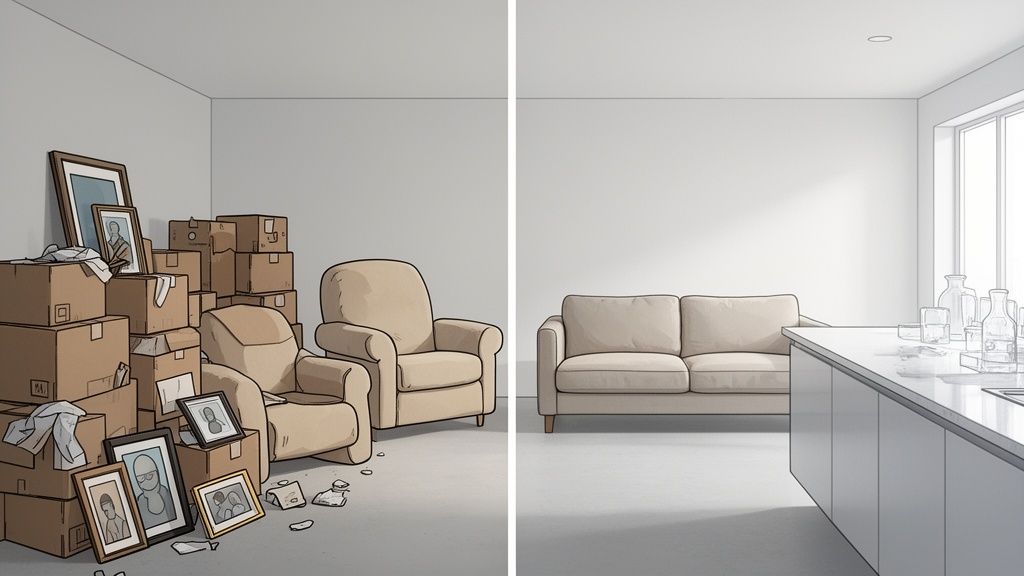
This process makes rooms feel larger, brighter, and more functional. The goal is to remove 30-50% of your belongings from visible areas, allowing the home's key features, like architectural details and square footage, to stand out.
Actionable Steps for Decluttering
Follow these specific steps to maximize your home's appeal:
Remove Personal Items: Pack away all family photos, children's artwork, trophies, and personalized decor. A buyer needs to see themselves on the mantelpiece, not the current owner.
Clear All Surfaces: Kitchen counters, bathroom vanities, and coffee tables should be almost completely clear. Leave only a few intentional, decorative items like a vase of flowers or a bowl of fruit.
Reduce Furniture: Take out any oversized, worn, or unnecessary furniture. A room with too much furniture feels small and cramped. For example, removing a large armchair from a modest-sized living room can dramatically increase the perceived floor space.
Organize Closets and Cabinets: Serious buyers will look inside closets. Organize these spaces neatly and ensure they are only about half-full to give the impression of ample storage.
AI-Powered Visualization
Before you start physically moving heavy furniture or packing boxes, you can visualize the impact of decluttering. Using an AI Virtual Staging tool allows you to upload a photo of your current room and see what it would look like with items removed. This helps you make strategic decisions about what to keep and what to store.
Pro Tip: For a powerful before-and-after effect in your listing, you can remove clutter from photos digitally to show buyers the home's full potential without any physical effort. This is an excellent marketing tool that highlights the space, not the stuff.
2. Optimize Lighting and Brightness
One of the most transformative real estate staging tips is to maximize a home's lighting. Proper lighting can make a space feel larger, cleaner, and more inviting, dramatically influencing a buyer's perception both in photos and in person. The goal is to create a bright, warm, and welcoming atmosphere that highlights the home's best features and minimizes flaws.
This involves a strategic combination of enhancing natural light and layering artificial light sources. A well-lit home not only photographs better but also creates a positive emotional response during viewings, making potential buyers feel more at home.
Actionable Steps for Lighting
Follow these specific steps to illuminate your property effectively:
Maximize Natural Light: Clean all windows inside and out. Remove heavy drapes and replace them with sheer curtains or leave windows bare to let in as much sunlight as possible.
Create a Consistent Color Temperature: Replace all mismatched or burnt-out bulbs. Use LED bulbs with a consistent "warm white" or "soft white" color temperature (around 2700K-3000K) throughout the home for a cohesive, inviting glow.
Layer Your Lighting: Ensure each room has three types of lighting: ambient (overhead fixtures), task (under-cabinet lights, reading lamps), and accent (spotlights on artwork). This creates depth and visual interest.
Schedule Photos Strategically: Plan your professional photoshoot for when the home receives the most natural light, typically between 10 AM and 3 PM. Properties photographed during optimal lighting can receive significantly more interest.
AI-Powered Visualization
Digital tools can showcase your home's lighting potential without expensive electrical work. An AI Virtual Staging service can digitally brighten dark photos, making rooms appear more vibrant. This helps buyers see past dim conditions and focus on the space itself.
Pro Tip: To create a high-end, aspirational mood for your listing, use a day to dusk conversion tool. This AI feature can transform a standard daytime photo into a beautiful twilight shot, complete with glowing interior lights and a stunning sunset sky, making your listing stand out online.
3. Create Inviting Entryways and First Impressions
The entryway is the first interior space a buyer experiences, setting the emotional tone for the entire tour. A welcoming, well-staged first impression can immediately make visitors feel at ease and optimistic about the home. This crucial area serves as a preview of the property's overall condition and style, making it one of the most high-impact real estate staging tips you can implement.

The goal is to create a bright, clean, and organized space that feels both sophisticated and spacious. A thoughtfully staged entryway draws buyers in and guides their eyes toward the home's main living areas, establishing a positive flow from the moment they step inside. Properties with bright, inviting foyers often receive more favorable feedback and can influence higher offers.
Actionable Steps for Entryway Staging
Follow these specific steps to craft a memorable first impression:
Maximize Light and Space: Use a large mirror to reflect natural light and create the illusion of a larger area. Ensure all light fixtures are clean and fitted with bright, warm-toned bulbs.
Establish a Focal Point: Add a single, slim piece of furniture like a console table or a stylish bench. This provides a functional and aesthetic anchor without cluttering the walkway.
Keep it Spotless and Neutral: The entryway must be completely free of personal items like shoes, coats, keys, and mail. A simple, neutral-colored rug can define the space while hiding minor floor imperfections.
Add a Touch of Life: A small, healthy plant or a simple vase of fresh flowers on the console table adds a touch of color and warmth, making the space feel vibrant and cared for.
AI-Powered Visualization
An empty or awkward entryway can be challenging to visualize. Before buying new furniture, you can use AI Interior Design tools to experiment with different layouts and decor styles. Upload a photo of your foyer to see how various console tables, mirrors, or lighting fixtures would look in the space. This ensures you make a confident, impactful choice.
Pro Tip: For a powerful first impression in your online listing, use a perfectly staged entryway photo as one of your primary images. This initial shot can significantly increase click-through rates and viewing requests by immediately showcasing the home's welcoming atmosphere.
4. Neutralize Wall Colors and Paint Strategically
While your vibrant purple kitchen or deep blue accent wall might reflect your personal style, bold colors can be a major roadblock for potential buyers. Neutralizing wall colors is one of the highest-return real estate staging tips you can implement. Soft, neutral tones like whites, beiges, and light grays act as a blank canvas, allowing buyers to easily envision their own furniture and decor in the space. This simple change helps a property feel brighter, larger, and more welcoming.
Strategic repainting is a powerful investment that removes personal taste from the equation and appeals to the broadest possible audience. A fresh coat of neutral paint can make a home feel new and well-maintained, significantly boosting its perceived value and reducing its time on the market. Studies have shown that properties with consistent, neutral color schemes often sell faster and for a higher price.
Actionable Steps for Strategic Painting
Follow these guidelines to get the most out of your painting efforts:
Prioritize Key Areas: Focus your budget and time on the most impactful rooms: the entryway, main living room, kitchen, and primary bedroom. These are the areas where buyers form their strongest first impressions.
Choose the Right Neutrals: Stick to popular, crowd-pleasing colors. Light grays like Sherwin-Williams' "Agreeable Gray" or warm off-whites like Benjamin Moore's "White Dove" are consistently successful choices that create a modern, clean look.
Don't Forget Trim and Doors: Freshly painted white or off-white trim, baseboards, and doors make the new wall color pop. This detail creates a crisp, finished appearance that signals quality and care to buyers.
Select the Right Finish: Use a matte or eggshell finish for walls in main living areas and bedrooms to minimize imperfections. Opt for a satin or semi-gloss finish in high-traffic or high-moisture areas like kitchens and bathrooms for better durability and easier cleaning.
AI-Powered Visualization
Committing to a new paint color can be daunting. Before you buy a single can of paint, you can eliminate the guesswork by using AI to test different options. An AI Home Design tool lets you upload a photo of your room and apply various paint colors virtually from major brands like Benjamin Moore or Sherwin-Williams. This ensures you choose the perfect neutral shade to maximize your home's appeal.
Pro Tip: You can experiment with dozens of shades in seconds using a paint color visualizer. This technology allows you to see exactly how a color will look in your space with your home's unique lighting, helping you make a confident and effective staging decision.
5. Stage Kitchens and Bathrooms as Transaction Drivers
Kitchens and bathrooms are the most scrutinized rooms in any property and often hold the most sway over a buyer's decision. Because these spaces are expensive to renovate, buyers look for signs of modern functionality and cleanliness. Strategic staging in these high-impact areas showcases their potential and can significantly increase a property's perceived value, making them powerful transaction drivers.
A well-staged kitchen and bathroom suggest the entire home is well-maintained, building buyer confidence. Properties with sparkling, decluttered kitchens and spa-like bathrooms often receive more competitive offers. The goal is to present these rooms as clean, functional, and inviting spaces where buyers can immediately see themselves living.
Actionable Steps for Staging
Follow these specific real estate staging tips to make your kitchens and bathrooms shine:
Deep Clean Everything: Scour every surface until it gleams. This includes appliances (inside and out), grout lines, sinks, faucets, and mirrors. A spotless room feels newer and better cared for.
Clear All Countertops: Remove everything from kitchen and bathroom counters. Leave only one or two intentional, decorative items, such as a small plant, a bowl of fresh fruit, or a stylish soap dispenser and a stack of new, neutral-colored towels.
Update Fixtures and Hardware: One of the most cost-effective updates is replacing old cabinet handles, drawer pulls, and faucets. A modern, matching set can instantly elevate the look of the entire room for a minimal investment.
Organize and Minimize: Just like closets, buyers will open cabinets and pantries. Organize these spaces neatly and remove excess items to create the impression of abundant, well-planned storage.
AI-Powered Visualization
Instead of guessing what changes will have the most impact, you can make data-driven decisions. An AI Interior Design tool can show you how new cabinet colors, hardware, or backsplash designs would look before you spend any money. This is especially useful for visualizing updates that will appeal to the broadest range of buyers.
Pro Tip: To get a clear vision for your kitchen's potential, you can explore AI-powered kitchen design ideas that demonstrate how different layouts and finishes can transform the space. This helps you identify the most impactful changes to make before listing your home.
6. Virtual Staging for Empty or Vacant Properties
Empty properties are notoriously difficult for buyers to connect with. Without furniture, it's challenging to gauge a room's scale, understand its potential layout, or feel any emotional attachment. AI Virtual Staging solves this problem by digitally adding realistic furniture, decor, and accessories to photos of vacant rooms, transforming them from cold, empty boxes into warm, inviting homes. This technology is a game-changer for new construction, rental turnovers, and estate sales.
Virtual staging offers a powerful return on investment, with some reports showing that virtually staged homes can generate up to 70% more online inquiries compared to empty listings. It allows you to furnish a property in multiple styles to appeal to different demographics without the high cost and logistical hassle of physical staging.
Actionable Steps for Virtual Staging
Follow these specific steps to effectively stage your empty property:
Start with High-Quality Photos: The final result of virtual staging is entirely dependent on the quality of the original images. Ensure photos are high-resolution, well-lit, and taken from flattering angles.
Choose a Relevant Design Style: Select a staging style that matches the property's architecture and the tastes of your target buyer. Whether modern, traditional, or minimalist, the decor should enhance the home's features.
Use Realistic Furniture Sizing: Ensure the digital furniture is scaled correctly to accurately represent the room's dimensions. This helps buyers understand how their own belongings will fit.
Disclose Clearly: Always be transparent in your listing description that the images have been virtually staged. Honesty builds trust with potential buyers.
AI-Powered Visualization
Modern tools have made this process faster and more accessible than ever. Instead of waiting days for a designer, you can use an AI Room Design platform to stage an entire vacant home in just a few hours. This rapid turnaround gets your property on the market faster, looking its absolute best.
Pro Tip: Not sure which style will resonate most? You can test multiple designs on the same room to see what works. Explore a gallery of virtual staging examples to see how different styles can completely transform a space and find inspiration for your own listing.
7. Highlight Architectural Features and Natural Elements
Every home has unique characteristics that make it special, and one of the most effective real estate staging tips is to shine a spotlight on these elements. By strategically highlighting architectural features like fireplaces, exposed beams, crown molding, or original hardwood floors, you can elevate the property's perceived value and create memorable focal points for buyers. This approach transforms these details from background elements into premium selling points.
Properly framing these features guides a buyer's attention and helps them appreciate the home's unique charm and quality craftsmanship. A well-staged fireplace, for example, doesn't just show a heat source; it sells a lifestyle of cozy evenings and family gatherings. This tactic is particularly powerful for historic homes or properties with custom designs.
Actionable Steps for Highlighting Features
Follow these specific steps to make your home’s best assets stand out:
Frame the Feature: Arrange furniture to create a clear line of sight to the architectural element. A seating area should be oriented toward the fireplace, and a rug can be placed to draw attention to beautiful hardwood floors.
Keep Decor Minimal: Avoid cluttering the very features you want to showcase. A fireplace mantel should have only a few carefully chosen items, and built-in shelving should be styled with a mix of books and decor, leaving plenty of open space.
Use Accent Lighting: Install a spotlight or an elegant floor lamp to illuminate unique details like a stone accent wall, an arched doorway, or ceiling beams, especially for evening viewings and photography.
Draw Attention to Windows: Ensure windows with beautiful views or unique designs are clean and framed with simple, elegant curtains that don't obstruct the light or the view itself.
AI-Powered Visualization
Determining the best furniture layout to accentuate a feature can be challenging. An AI Virtual Staging tool can help you experiment with different arrangements digitally. Upload a photo of the room and test where to place sofas, chairs, and tables to best frame a fireplace or a bay window without moving heavy objects.
Pro Tip: When writing your property listing description, be sure to explicitly mention these unique architectural details. For example, write "Enjoy evenings by the grand brick fireplace" or "Soaring ceilings with original exposed beams add historic charm to the living space." This primes buyers to look for these premium features during their tour.
8. Use Strategic Furniture Placement and Scale
The way furniture is arranged can dramatically alter a buyer's perception of a room's size, flow, and purpose. Strategic furniture placement is one of the most powerful real estate staging tips because it creates clear traffic patterns, highlights dimensions, and defines functional zones. Using furniture that is correctly scaled to the room is crucial; oversized pieces make a space feel cramped, while undersized items can make it feel sparse and uninviting.
The goal is to achieve balance. Your home should have enough furniture to feel cozy and show its potential, but not so much that it obstructs movement or hides the home's features. This technique helps buyers visualize their own lives in the space by showcasing its true functionality and spaciousness.
Actionable Steps for Furniture Placement
Follow these specific rules to arrange furniture effectively:
Create Clear Pathways: Ensure there is an obvious and easy path to walk through every room. Pull furniture away from walls to create a more intimate and open feeling, avoiding a "lined-up" look.
Define Functional Zones: In open-concept spaces, use area rugs and furniture groupings to define distinct areas, like a conversation area, a reading nook, or a dining space.
Choose Appropriate Scale: A massive sectional sofa can overwhelm a modest living room, making it feel 30% smaller. Opt for an appropriately-sized sofa and a single accent chair to maximize perceived square footage.
Highlight Key Features: Arrange furniture to draw attention to focal points like a fireplace, a large window with a view, or built-in shelving. Never block windows or architectural details.
AI-Powered Visualization
Before you start moving heavy couches, you can experiment with different layouts digitally. For crucial communal areas, mastering how to achieve a designing a living room layout that works is key to making a strong impression. An AI Room Design tool can help you test various arrangements without any physical effort.
Pro Tip: Use an AI tool with sketch-to-3D rendering to quickly visualize different furniture configurations. Upload a simple floor plan sketch and see it transformed into isometric or perspective views, allowing you to perfect the layout and scale before committing to a final arrangement.
9. Create Emotional Connection Through Scent and Sensory Staging
While visual staging is crucial for online listings, sensory staging creates a powerful emotional connection during in-person viewings. The sense of smell is directly linked to memory and emotion, making it a subtle yet highly effective tool. A pleasant, welcoming aroma can make a house feel like a home, encouraging buyers to linger longer and form positive associations with the property.
This technique bridges the gap between digital appeal and the physical experience. A home that smells clean, fresh, and inviting feels well-maintained and cared for. This simple addition to your real estate staging tips can significantly influence a buyer's perception and emotional response, making your property more memorable than others they visit.
Actionable Steps for Sensory Staging
Follow these specific steps to create a welcoming atmosphere:
Introduce Natural Scents: Place fresh flowers like tulips, hydrangeas, or roses in entryways and main living areas. The subtle, natural fragrance adds a touch of sophistication and freshness without being overwhelming.
Bake Something Simple: The classic advice to bake cookies or bread before a showing works because it evokes a sense of comfort and home. Aim to do this 1-2 hours before potential buyers arrive for the best effect.
Use Subtle Diffusers: If baking isn't practical, an essential oil diffuser with a light scent like vanilla, citrus, or lavender is a great alternative. Avoid strong, artificial air fresheners or plug-ins, which can trigger allergies or feel overpowering.
Eliminate Bad Odors: Before adding pleasant scents, ensure you’ve neutralized any negative ones from pets, cooking, or dampness. A deep clean is the first and most important step in scent staging.
AI-Powered Visualization
After you've perfected the physical and sensory staging, capturing that atmosphere for your digital marketing is key. Use high-quality photos of the staged spaces, complete with fresh flowers and other sensory cues. You can then use an AI Home Décor tool to ensure these beautifully staged rooms are presented perfectly online, documenting the inviting environment you've created.
Pro Tip: Scent is about creating a positive memory. Avoid competing fragrances by ensuring your personal perfumes, cleaning products, and any diffusers don't clash. The goal is a single, subtle, and cohesive scent profile throughout the home that feels natural and inviting.
10. Professional Photography and AI-Enhanced Listing Visuals
In today's digital-first market, high-quality visuals are non-negotiable. This critical real estate staging tip combines professional photography with AI enhancements to create listing images that captivate buyers. The foundation is a set of crisp, well-lit professional photos, which are then elevated using AI tools to showcase the property’s maximum potential, leading to a dramatic increase in online engagement and serious inquiries.
This powerful combination allows you to present a polished, aspirational version of the home before buyers even step inside. AI can digitally add stylish furniture, change wall colors, improve lighting, and even swap a gray sky for a beautiful twilight effect. Listings with these enhanced visuals receive significantly more online traffic and are perceived as more valuable.
Actionable Steps for AI-Enhanced Visuals
Follow these specific steps to create compelling listing photos:
Start with a Professional Photographer: AI works best with high-quality source images. Hire a professional to capture your home's best angles with proper lighting and composition.
Enhance and Optimize: Use an AI Virtual Staging tool to enhance the photos. This can include correcting lighting, replacing overcast skies, and adding virtual twilight to create a warm, inviting mood.
Create Design Variations: Generate 3-5 different design styles for key rooms like the living room or primary bedroom. This appeals to a wider range of buyer tastes, showing them multiple ways the space could look.
Test Changes Digitally: Before committing to painting or physical staging, use AI to test different wall colors, furniture layouts, and décor styles to find the most appealing combination.
AI-Powered Visualization
Leveraging AI for your listing photos is a strategic marketing move that can set your property apart. Instead of just showing what is, you can show what could be. This approach not only attracts more viewers but also helps them emotionally connect with the property. Using an AI Home Design tool saves agents and sellers dozens of hours by testing design concepts virtually instead of through physical labor.
Pro Tip: Ensure your visual marketing strategy is top-notch by exploring how to get professional real estate photos that are perfectly optimized for AI enhancement. Remember to always disclose in your listing description that images have been virtually staged or altered.
Real Estate Staging: 10-Point Comparison
🔄 Implementation Complexity | 💡 Resource Requirements | 📊 Expected Outcomes | ⚡ Ideal Use Cases | ⭐ Key Advantages |
|---|---|---|---|---|
Declutter and Depersonalize Spaces — Removing 30–50% of visible items | Minimal (time, off-site storage) | Immediate perception boost; rooms look larger/brighter (↑ viewing appeal ~20–30%) | Quick prep before photos/open houses; all property types | ⭐ Very low cost; universal impact; fast to execute |
Optimize Lighting and Brightness — Natural + layered artificial light | Moderate (bulbs, fixtures, possible lighting gear) | Better photos and mood; perceived larger/cleaner spaces (golden-hour photos ↑ inquiries ~40%) | Photo shoots, virtual tours, darker interiors | ⭐ Transforms atmosphere; essential for photography |
Create Inviting Entryways and First Impressions — Clean, lit, organized foyer | Low (mirror, console, lighting tweaks) | Strong first impression; influences buyer decisions (staged entries ↑ offers ~12%) | Listings where curb-to-interior flow matters; high-traffic showings | ⭐ High visible ROI with modest investment |
Neutralize Wall Colors and Paint Strategically — Use neutrals for cohesion | Medium (professional painters; $500–$2,000 typical) | Cohesive flow; hides wear; perceived value ↑ ~5–10% | Homes with bold/trendy colors or visible wear before listing | ⭐ High ROI; broad buyer appeal |
Stage Kitchens and Bathrooms as Transaction Drivers — Clean, minimal, modern | Medium (deep cleaning, minor hardware/fixtures) | Largest influence on purchasing; perceived value ↑ ~10–15%; more offers (15–25%) | Mid/high-end listings; properties where buyers focus on functionality | ⭐ Highest staging ROI; signals good maintenance |
Virtual Staging for Empty or Vacant Properties — Photorealistic furniture renders | Low per image ($50–$200); needs high-quality photos | Major engagement lift; inquiries ↑ 40–70% for vacant units | Vacant homes, new construction, foreclosures; fast marketing turnarounds | ⭐ Cost-effective vs. physical staging; multiple style options |
Highlight Architectural Features and Natural Elements — Frame unique details | Medium (accent lighting, careful styling, photography) | Differentiates listings; adds perceived value (sale prices ↑ ~8–12%) | Historic or character homes; properties with standout features | ⭐ Emphasizes uniqueness without large spend |
Use Strategic Furniture Placement and Scale — Define flow and zones | Medium–High (measurements, possible rental/movers) | Improves perceived space/flow; rooms feel correctly scaled (~30% larger effect) | Occupied homes, show-ready interiors, open-concept spaces | ⭐ Establishes function and emotional connection |
Create Emotional Connection Through Scent and Sensory Staging — Subtle scents/flowers | Low ($10–$50) | Positive emotional response; better feedback (↑ positive feedback 5–15%) | In-person showings and open houses (not for photos) | ⭐ Inexpensive; strong sensory impact when subtle |
Professional Photography and AI-Enhanced Listing Visuals — Pro photos + AI edits | Medium (professional photographer + AI tools/training) | Large online engagement lift (inquiries ↑ 40–70%); multiple design variations | Competitive markets, remote buyers, high-value listings | ⭐ Polished, scalable marketing; rapid concept testing |
Your Blueprint for Staging Success
We’ve navigated the essential landscape of real estate staging, exploring ten pivotal strategies designed to transform any property into a buyer’s dream. From the foundational acts of decluttering and depersonalizing to the cutting-edge application of AI-enhanced visuals, each tip serves a single, powerful purpose: to create an irresistible vision of home that resonates deeply with potential buyers. Staging is far more than just decorating; it is a strategic marketing tool that bridges the gap between a vacant space and a vibrant, lived-in future.
By implementing these real estate staging tips, you are not merely cleaning rooms or arranging furniture. You are crafting a compelling narrative. You are telling a story where the buyer is the protagonist, and the property is the perfect setting for their next chapter. This narrative is built on a foundation of cleanliness, light, and strategic neutrality, but it truly comes alive through thoughtful details that evoke emotion and aspiration.
From Foundational to Futuristic: Your Key Takeaways
The journey to a perfectly staged home is a layered process. Let's distill the core principles we've covered into a clear, actionable summary. Mastering these concepts is the key to unlocking a property's maximum market potential.
The Non-Negotiable Basics: Never underestimate the power of a pristine, depersonalized canvas. Decluttering, deep cleaning, and applying a fresh coat of neutral paint are the cornerstones of effective staging. These actions eliminate distractions and allow buyers to mentally place their own belongings in the space.
The Emotional Triggers: Staging is about selling a feeling. Creating a welcoming entryway, optimizing natural and artificial light, and engaging the senses with subtle, pleasant scents are crucial for forging an immediate emotional connection. Remember, buyers often make decisions based on gut feelings within moments of entering a home.
The Strategic High-Impact Zones: Focus your energy where it counts most. The kitchen and bathrooms are transaction drivers. Ensuring these spaces are spotless, updated, and presented as functional yet luxurious hubs can significantly influence a buyer’s perception of the home's overall value.
The Modern Advantage with Technology: In today's digital-first market, your online presence is your first showing. Professional photography is essential, but integrating advanced tools can set your listing apart. This is where AI Virtual Staging becomes a game-changer, allowing you to furnish empty rooms digitally, test different styles, and create stunning visuals without the cost and logistics of physical furniture. It’s one of the most cost-effective real estate staging tips for a modern agent or seller.
Putting Your Staging Blueprint into Action
The ultimate goal of applying these real estate staging tips is to minimize the time your property spends on the market while maximizing its final sale price. Each step you take, from arranging a simple throw pillow to generating a complete virtual room with an AI Room Design tool, is an investment in achieving that outcome.
You now possess a comprehensive blueprint for success. You understand how to prepare a property physically, appeal to buyers emotionally, and leverage technology to create a standout online listing. The key is to approach staging not as a chore, but as an opportunity. It is your chance to control the narrative, highlight the best features of the property, and present a compelling vision that buyers simply cannot resist. By thoughtfully applying these strategies, you are setting the stage for a swift and profitable sale.
Ready to bring your empty listings to life in minutes? Put these real estate staging tips into action with the power of AI. Decor8 AI offers a cutting-edge AI Virtual Staging solution that transforms vacant property photos into beautifully furnished, market-ready images. Visit Decor8 AI to start creating stunning visuals that captivate buyers and sell homes faster.
Comments