
A Guide to Virtual Staging Software for Real Estate
Think of an empty room in a property listing. For a handful of buyers, it’s a blank canvas full of possibility. But for most, it’s just… empty. It's hard to imagine where the sofa goes or how big a dining table will fit. That's where virtual staging comes in.
It’s a powerful marketing tool that digitally adds stylish furniture and decor to photos of empty or dated homes. Instead of physically hauling in furniture, you transform a vacant space into a warm, inviting home with just a few clicks. This helps potential buyers make an emotional connection and see what a property could be, a crucial step in getting them through the door.
What Is Virtual Staging Software and How Does It Work
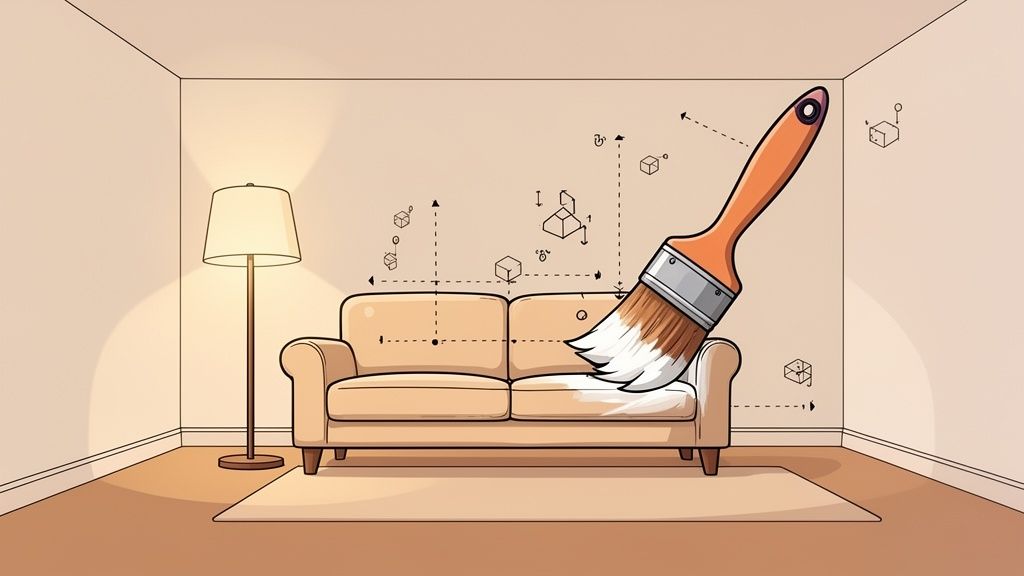
At its heart, virtual staging software is like a digital interior design studio. It uses smart technology to place photorealistic 3D models of furniture and accessories directly into a 2D photo of a room. The best platforms today use sophisticated AI Interior Design to read the room's layout, lighting, and style, ensuring the final result looks completely natural.
The whole process is surprisingly straightforward:
Upload an Image: It all starts with a good, high-resolution photo of the empty room.
AI Analysis: The software gets to work, analyzing the photo’s perspective, dimensions, and where the light is coming from.
Style and Furnish: You pick a design vibe—like Modern, Scandinavian, or Farmhouse—and the AI populates the space with furniture that fits the style and scale of the room.
Render the Final Image: In moments, the software generates a brand-new, fully staged photo. It even adds realistic shadows and reflections to make the digital furniture look like it’s really there.
The Power of Visualization in Real Estate
The main job of virtual staging is to close the "imagination gap." An empty house can feel cold, impersonal, and even look smaller than it is. When you add furniture digitally, you're not just filling space—you're providing context. Buyers can instantly understand the scale and flow of a room, which helps them truly connect.
This isn't just a hunch; the numbers back it up. A report from the National Association of Realtors (NAR) found that a whopping 81% of buyers felt staging made it easier to visualize a property as their future home. The impact on performance is huge, too. Listings using virtual staging software for real estate can attract 87% more online views and slash the property's time on the market by up to 50%.
More Than Just Filling a Room
Let’s be honest, traditional staging is a logistical nightmare. It involves renting, moving, and arranging heavy furniture, all of which costs a lot of time and money. Virtual staging throws all that out the window.
It offers incredible flexibility. Don’t like the couch? Swap it out. Want to appeal to a younger buyer? Switch from a traditional to a mid-century modern look in seconds. You can even stage the same room in multiple ways to show off its potential—that spare bedroom could be a home office in one photo and a nursery in another. An AI Room Design tool makes these changes instant.
This technology is no longer about just adding a couch to a photo; it's about crafting a narrative. It allows real estate professionals to sell not just a property, but a lifestyle—a vision of what life could be like in that space.
This ability to completely transform a listing’s appeal is why virtual staging has become such an indispensable tool. It makes properties look their best online, which drives more interest, gets more people to showings, and ultimately helps you sell faster and for a better price. You can see how to put this into practice with our complete guide to AI-powered virtual staging.
Key Features of Modern Virtual Staging Platforms
Today’s virtual staging software for real estate is a world away from the clunky tools of the past. We're no longer just dropping a digital sofa into an empty room. These platforms are now full-blown visual marketing suites designed to tackle any listing challenge you can throw at them—vacant, cluttered, or just a bit dated.
A lot of the magic comes from smart technology. For instance, an AI Interior Design engine can look at a room's layout, size, and lighting to suggest furniture and decor that actually fits. It takes the guesswork out of the equation and gives you professional-looking results in minutes.
And this isn't just for empty rooms. These tools are built to enhance any property photo, making them a secret weapon for agents, photographers, and developers who need to produce stunning visuals without breaking the bank.
From Decluttering to Full-Scale Renovations
One of the most practical features I've seen is AI-powered object removal. You know the drill: you walk into a seller's home, and it's packed with personal photos, worn-out furniture, and general clutter. Instead of the awkward conversation about moving everything, you just snap a photo. The software digitally erases it all, giving you a clean slate to work with.
This feature alone is a massive help for occupied listings. You can show off the home's true potential without the logistical nightmare of physical decluttering. But the best platforms don't stop there—they offer virtual renovation tools.
These tools let you show buyers what’s possible. You can digitally repaint walls to a neutral color, swap out old carpet for modern hardwood, or even mock up a complete kitchen remodel, all without lifting a hammer.
This is huge for helping buyers see past a home’s current state. An AI Home Design tool turns a property that "needs some work" from a potential negative into an exciting opportunity.
Advanced Rendering and Creative Flexibility
The whole illusion of virtual staging lives or dies on one thing: photorealistic rendering. The best platforms get this right, creating images where the digital furniture looks like it truly belongs in the room. They nail the small details that make all the difference:
Lighting and Shadows: The software understands where light is coming from and casts realistic shadows, anchoring the virtual items in the space.
Reflections: New furniture is accurately reflected on shiny floors, windows, and countertops.
Textures and Scale: The weave of a fabric chair or the grain of a wood table looks real, and every piece is scaled perfectly to the room’s dimensions.
Beyond realism, these tools give you a ton of creative control. Sky replacement is a simple but powerful feature that can swap a gloomy, overcast day for a bright blue sky or a beautiful sunset, instantly boosting curb appeal. Some platforms can even turn a basic architectural sketch into a fully furnished 3D rendering.
To see how these capabilities come together in practice, check out the top AI features every interior designer should use to bring their visions to life. It's this kind of flexibility that lets you market any property in its best possible light.
What’s In It For Real Estate Professionals?
Let's be honest, any new tech has to answer one big question: what’s the ROI? With virtual staging software, the payoff is fast, clear, and gives agents, photographers, and developers a serious leg up on the competition. This isn't just about making empty rooms look good; it's about closing deals faster and for more money.
You don’t have to take my word for it—just look at the numbers. The market is exploding, projected to jump from US$388 million in 2024 to a staggering US$1,906 million by 2031. That kind of growth only happens when a tool delivers real, undeniable value. Professionals are flocking to virtual staging because it’s efficient, affordable, and, according to some reports, can cut marketing costs by up to 95% compared to traditional staging. You can dig into the specifics in this report on the real estate market.
Faster Sales and Bigger Offers for Agents
For agents, it’s all about saving money and speeding up the sale. Everyone knows physical staging is a budget-killer. You’re looking at thousands of dollars for furniture rental, movers, and designer fees. AI Virtual Staging flips that script, offering a high-impact solution that costs next to nothing and takes just a few minutes.
That efficiency directly leads to faster sales. A home that feels warm and lived-in helps buyers build an emotional connection; they can actually picture themselves drinking coffee in that kitchen or watching a movie in that living room. In a world of endless online listings, those visuals are what make a buyer stop scrolling. We explore this more in our real estate agent's guide to virtual staging.
The infographic below shows exactly how these tools work their magic, from AI-powered design to decluttering and virtual renovations.
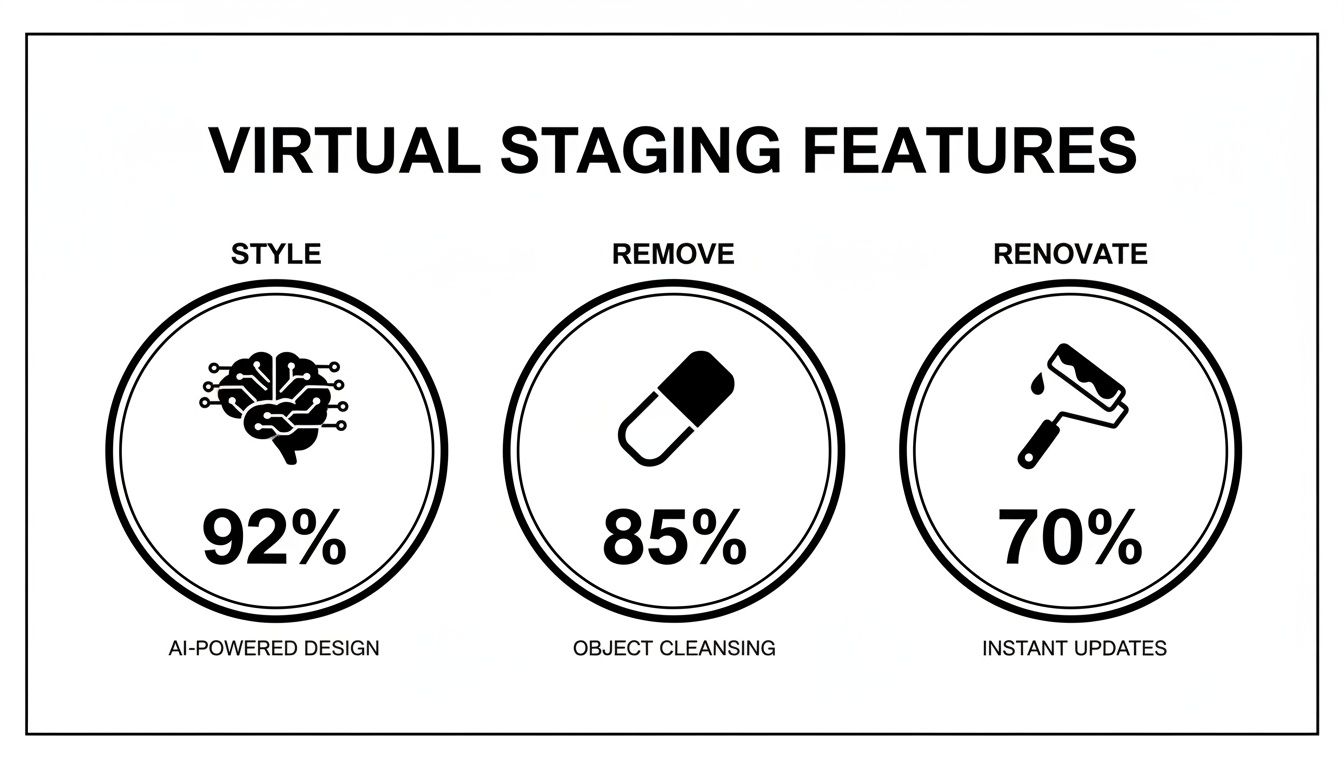
It’s a complete toolkit for turning any bland photo into a powerful marketing magnet.
A New Revenue Stream for Photographers
If you're a real estate photographer, you’re sitting on a goldmine. Instead of just handing over photos of empty rooms, you can now offer virtual staging as a premium add-on. This isn't just a small upgrade—it's a whole new service that can seriously boost your income.
By adding virtual staging to your packages, you become the go-to person for all things visual. Agents are more than happy to pay a little extra for a service that saves them a ton of hassle and delivers a polished, ready-to-list product. It elevates you from a simple photographer to a strategic marketing partner.
Selling the Dream for Developers
How do you sell a property that doesn’t exist yet? For developers, this has always been the biggest hurdle. Trying to get buyers excited about a floor plan is tough. AI Home Design completely changes the game by creating photorealistic images of a finished property before the first nail is hammered.
You can use these stunning visuals in brochures, on your website, and across social media to attract buyers and investors early on. Imagine showing off different design styles and finish options without spending a dime on a model home. It’s the perfect tool for pre-selling units, improving cash flow, and getting projects funded.
To really see the difference, let’s compare the old way with the new way.
Physical Staging vs AI Virtual Staging A Cost and Time Comparison
The table below breaks down the key differences between schlepping furniture around and simply clicking a button. It highlights why so many in the industry are making the switch.
Factor | Physical Staging | AI Virtual Staging Software |
|---|---|---|
Average Cost | $2,000 - $7,000+ per project | $20 - $100 per image |
Turnaround Time | 1-2 weeks for coordination and setup | Under 1 hour (often minutes) |
Flexibility | Limited to one style per staging | Unlimited styles and revisions |
Logistics | Complex; requires movers, designers, inventory | Simple; just upload a photo |
The numbers don’t lie. AI virtual staging is faster, cheaper, and way more flexible. It’s a no-brainer for any real estate pro looking to work smarter, not harder.
How to Choose the Right Staging Software
With so many options out there, picking the right virtual staging software for real estate can feel overwhelming. The right tool should feel like a natural part of your marketing toolkit, but the wrong one can quickly become a source of frustration and mediocre results. Think of it like choosing a business partner—you need someone reliable who understands your goals.
To find the perfect fit, it’s best to focus on a few key areas that directly affect your daily work and the quality of your listings. This isn’t about chasing the cheapest or most feature-packed option. It’s about finding the most effective AI Virtual Staging tool for your specific needs, whether you're a solo agent, a photographer, or a growing brokerage.
Evaluate the Quality of the Final Image
Above all else, the realism of the final staged photo is what matters most. A poorly rendered image with flat lighting or furniture that just looks… off can do more harm than good. It can make a beautiful listing feel cheap or untrustworthy. When you're checking out a platform, look closely at their portfolio or the results from a free trial.
Keep an eye out for these tell-tale signs of high-quality rendering:
Realistic Lighting and Shadows: Does the virtual furniture cast soft, natural shadows that align with the room's light sources?
Accurate Reflections: Do shiny surfaces like hardwood floors, windows, or countertops properly reflect the new furniture and decor?
Scale and Perspective: Does the furniture look like it actually fits in the space? The proportions and angles should perfectly match the room's perspective.
These details are what separate a professional job from an amateur one. The best virtual staging is so good that a buyer would never even guess the furniture isn’t real.
Prioritize Simplicity and an Easy Workflow
Let's be honest: the best software is the one you'll actually use. A clunky interface with a steep learning curve will only slow you down and create a bottleneck when you're trying to get a property on the market. Look for a platform designed for a smooth, intuitive experience.
The goal is to spend your time marketing properties, not fighting with confusing software. A good platform lets you get from an empty room photo to a stunningly staged image in minutes, not hours.
Think about your own comfort level with technology. Many of the best modern tools use AI to do the heavy lifting. Some platforms now let you upload a photo, pick a style like “Coastal” or “Industrial,” and the AI handles the rest. This makes powerful design accessible to everyone on the team.
Assess the Furniture and Style Libraries
The variety and quality of the digital furniture catalog are also critical. A limited or dated selection of styles will hold you back. You need to be able to match the decor to the home’s architecture and the tastes of potential buyers. A modern downtown condo needs sleek, contemporary pieces, while a rustic farmhouse requires something completely different.
Look for a platform with a wide range of styles that regularly adds new items to its collection. Customization is another huge plus. Top-tier tools offer advanced features like using simple text prompts for AI Room Design. You can just type, “Add a navy blue velvet sofa and a brass coffee table,” to get exactly what you envision. You can explore some of the top tools for AI room design to see just how powerful this has become.
Finally, check for features that solve real-world problems. If you often list homes that are still occupied, a solid clutter removal feature is a must-have. This lets you digitally erase existing furniture and personal items, creating a clean slate to work with. That one feature alone can save you and your clients an incredible amount of time and physical effort.
Integrating Virtual Staging Into Your Workflow
Bringing virtual staging software for real estate into your process doesn't mean you have to tear up your current marketing plan. Think of it more like adding a turbocharger to your car—it fits right into your existing system and makes everything faster, more powerful, and a whole lot more effective. It takes a standard task, like taking property photos, and turns it into a serious marketing advantage.
The real beauty of this technology is how it adapts to what you do. If you're a real estate agent, it’s a quick, final polish before a listing hits the market. For a photographer, it's a fantastic new service to offer clients. For a developer, it's a way to create compelling marketing visuals well before the last nail is hammered in.
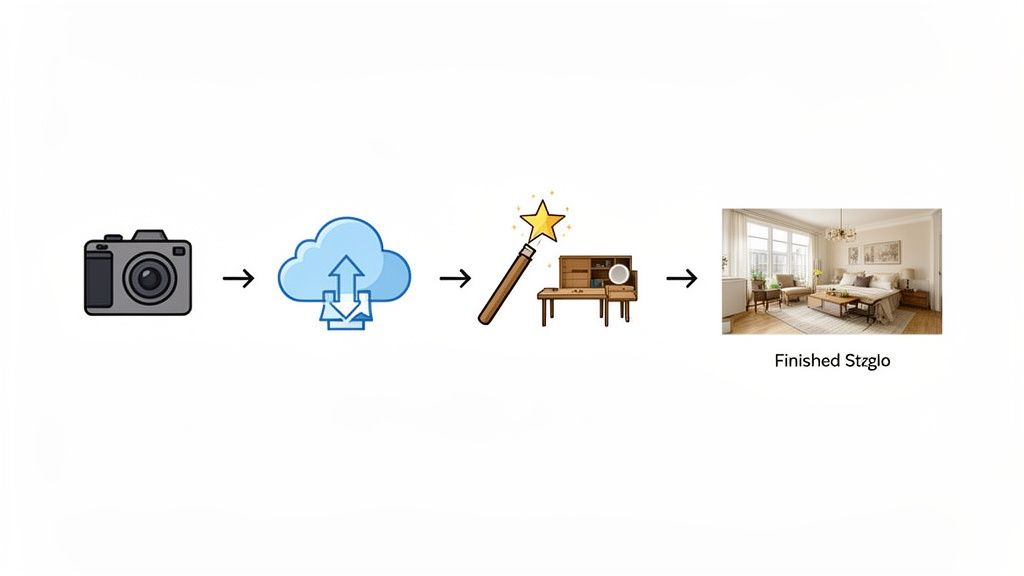
A Simple Workflow for Real Estate Agents
For agents who are always on the move, the process is designed to be quick and painless. It’s all about turning an empty property into an irresistible listing in just a handful of steps.
Capture High-Quality Photos: It all starts with the source material. Get clear, well-lit photos of every empty or cluttered room. Great photos are the foundation for believable virtual staging.
Upload to the Software: Pop the images into your chosen virtual staging platform. You can usually do this right from your computer or even your phone.
Choose a Target Style: Pick a design style that not only fits the home but also speaks to the kind of buyer you're trying to attract. Many modern platforms use AI Interior Design to suggest styles, or you can guide them with simple text prompts.
Generate and Download: In minutes, the software works its magic and renders the newly staged images. Just download the high-resolution photos and you're ready to upload them straight to the MLS, your website, and your social media feeds.
Expanding Services for Photographers
If you're a real estate photographer, this is a golden opportunity to add a new revenue stream to your business. By offering virtual staging, you can position yourself as the one-stop shop for all your clients' visual marketing needs.
The workflow is a natural extension of what you already do. After a photoshoot, simply offer virtual staging as an add-on service. You can even show clients "before" and "after" shots—the empty room next to a beautifully furnished version. It's a simple way to boost your income on each project while delivering huge value to agents who can now get everything they need from one person.
Advanced Integration with APIs and SDKs
For bigger players like large brokerages, marketing platforms, or property developers, virtual staging can become a fundamental part of your own tech. This is where Application Programming Interfaces (APIs) and Software Development Kits (SDKs) come in.
An API acts like a bridge, allowing your own website or application to communicate directly with the virtual staging software. This means you can build staging capabilities right into your own platform, offering a branded, seamless experience for your agents or clients.
Imagine a company portal where an agent can upload photos and stage them without ever leaving your website. This kind of deep integration makes the technology feel like it was built in-house. An AI Home Décor tool, for instance, could be embedded right into a property management app, letting tenants visualize how their furniture might look in a new apartment.
This level of custom integration is how you scale visual marketing across an entire organization. If you want to dive into the technical details, you can explore how an AI-powered virtual staging API for real estate apps works. Of course, knowing how to use the space effectively is just as important as the tech itself. A good guide to planning a room layout can give you the design fundamentals needed to create truly convincing virtual spaces. Whether it's through a simple upload or a full-blown API integration, this software is flexible enough to fit into any real estate workflow.
The Future of Real Estate Marketing is Virtual
If you still think of virtual staging as a gimmick, it’s time for a rethink. It’s no longer a novelty; it’s a cornerstone of any smart, modern real estate strategy. We've seen how virtual staging software for real estate isn't just about dropping furniture into an empty room. It’s about building a story and selling a vision that clicks with today's homebuyers.
These tools give you the power to go beyond a property’s floor plan and start selling a lifestyle. You’re turning a blank canvas into a warm, inviting home, creating an emotional pull that photos of four empty walls just can't deliver. Helping buyers see themselves in a space is how you cut through the noise in a packed online market.
The Next Frontier: AI and Immersive Experiences
And this technology isn't standing still. The next wave is all about virtual and augmented reality (VR/AR), which will create truly immersive tours. Soon, clients will be able to pop on a headset from their couch and "walk through" a home you've staged, swapping out furniture or changing the layout on the fly.
At the same time, AI Home Design is getting smarter and faster, delivering staging that’s not only incredibly realistic but also deeply personalized. As the industry barrels toward this virtual-first approach, it’s vital for agents and brokers to wrap their heads around broader modern digital marketing strategies for real estate agents to stay in the game.
The real takeaway here is about empowerment. Adopting virtual staging isn’t about chasing a trend. It’s about taking charge of your marketing, making your listings pop, and ultimately, getting better results for your business.
The future of selling homes is visual, it’s instant, and it’s personal. By embracing these tools, you’re not just getting ready for what's coming—you’re building a more effective and engaging way to sell property and securing your success for years to come.
Frequently Asked Questions
Jumping into virtual staging for the first time? It's normal to have a few questions. Let's walk through some of the most common ones we hear from agents and photographers.
How Realistic Does AI Virtual Staging Look?
Honestly, it's gotten shockingly good. Top-tier platforms create images that are practically indistinguishable from a professionally staged home. The magic is in the details—how the software handles light, shadows, and reflections to make the digital furniture look like it truly belongs in the room.
Think of it this way: these AI Virtual Staging systems have studied millions of interior design photos. They’ve learned what makes a room look right—the proper scale, perspective, and textures. The result is so convincing that buyers often can't tell the difference, which is exactly what you want for a high-impact listing.
Can I Use Virtual Staging on a Furnished Room?
You bet. This is actually one of the most powerful features of modern staging software. If you're dealing with a cluttered or owner-occupied home, tools like object removal can digitally erase the existing furniture. It's like getting a clean slate without lifting a single box.
Once the old stuff is gone, you can stage the room from scratch with a whole new set of furniture and decor. This is a game-changer for properties with dated styles or personal clutter, letting you show off the home's true potential, not the current owner's taste. An AI Home Décor tool makes this restyling process fast and simple.
Is Virtual Staging Software Difficult to Use?
Not anymore. The best tools are built for busy real estate pros, not tech wizards. The whole process is designed to be straightforward. You upload your photo, pick a style, and the AI does the heavy lifting, often delivering a finished image in minutes.
The goal of today’s software is to make professional design accessible to everyone. Many now use simple text prompts for AI Room Design—you can just type "Modern Farmhouse" or "Coastal" and let the AI take care of the rest.
This simplicity means anyone can create beautiful, listing-ready photos. With many platforms now available right on your phone, you can even stage a property while you're still on-site. What used to be a complicated design task is now just a few taps away.
Ready to see what your listings could look like? Decor8 AI gives you everything you need—over 50 design styles, clutter removal, and smart AI tools—to make any property look its absolute best. Start creating stunning images in seconds at https://www.decor8.ai.
Comments