
Brown Walls White Trim A Guide to Timeless Home Style
There's a reason the combination of brown walls and white trim keeps showing up in design magazines year after year. It's a classic for a reason—it just works. This pairing strikes that perfect balance between feeling warm and grounded, yet bright and clean, creating a look that's both sophisticated and incredibly welcoming.
This isn't just some fleeting trend; it’s a foundational design choice with deep roots.
Why Brown and White is a Timeless Choice
When you pair a rich brown wall with crisp white trim, you're tapping into a color scheme that delivers both comfort and elegance. It’s a combination that has proven its staying power for centuries. Think back to the American Federal Period between 1780 and 1830; this very palette was a signature of refined homes, using earthy wall colors to make detailed white millwork stand out.
I'm going to walk you through everything you need to pull this look off in your own home, from start to finish. We'll get into the nitty-gritty of:
Picking the right shades of brown and white that work with your room's light.
My best tips for prep and painting so you get those razor-sharp, professional lines.
How to style the finished room to create a cohesive, inviting space.
Using a tool like Decor8 AI to see how it will all look before you commit.
The Appeal of Earthy Tones
There’s a real psychology at play here. Brown is an anchor. It makes a room feel secure, stable, and connected to the natural world, which has a calming effect on us.
But a room of solid brown could feel a bit heavy on its own. That's where the white trim comes in. It acts like a picture frame, outlining the architecture and adding a splash of brightness that makes everything pop. It keeps the space from feeling too dark or enclosed.
This balance creates a room that feels both dynamic and harmonious. The brown gives you that cozy, enveloping feeling, while the white trim is like a breath of fresh air, making the space feel both intimate and open.
This versatility is why I love it. It’s a fantastic canvas for so many different styles. Whether you lean traditional, modern, rustic, or something in between, this color scheme can support it beautifully. It’s particularly effective in a transitional interior design style, where the goal is to blend classic comfort with clean, contemporary lines.
How To Select The Perfect Brown and White Paints
This is where the fun really starts. Choosing the right paint is more than just grabbing a can of "brown" and "white"; it's about finding the specific shades that will make your room sing. The character of a brown can completely transform a space. A light, sandy taupe feels open and breezy, while a deep, rich chocolate can make a room feel like a cozy, sophisticated retreat.
The key is getting a handle on the undertones. A brown with red or yellow undertones will radiate warmth, which is very different from a brown that has a cooler gray or green base. The same goes for your white trim. A stark, pure white creates a sharp, modern pop, but a creamy off-white provides a much softer, more traditional feel.
Decoding Brown Undertones
The real secret to making this color combo work is understanding how the undertones in your paint will play with the natural light in your home. I've seen a gorgeous warm brown look disappointingly muddy in a north-facing room that gets that cool, blue-ish light all day. On the flip side, a cool-toned greige can feel a bit sterile in a room flooded with the warm, yellow light from a southern exposure.
My best advice? Always, always test samples. Paint a big swatch on the wall and watch it throughout the day—in the morning, at high noon, and as the sun sets. This is the only way to see how the color truly behaves in your unique space. It’s a simple step that can save you from a costly and frustrating mistake.
To speed things up, you can also use an AI wall paint color visualizer to try out different brown and white combinations directly on a photo of your room. It's a great way to narrow down your choices before buying samples.
This graphic really breaks down why this pairing is so powerful.

It’s this mix of a grounding brown, a brightening white, and incredible versatility that makes the palette a classic foundation for just about any design style.
Choosing The Right Paint Finish
Color is only half the battle. The paint's finish—or sheen—plays a massive role in both the final look and its durability. Different sheens reflect light in different ways and stand up to cleaning differently, so you have to match the finish to the surface.
If you're new to this, it's worth understanding different paint finishes before you buy. It can make a huge difference in the final outcome.
Here’s a quick rundown of what I typically recommend:
For Walls (Brown): I almost always lean toward an eggshell or matte finish. These low-sheen options are fantastic at hiding minor bumps and imperfections on the wall. They also create a soft, velvety look that makes those rich brown tones feel incredibly luxurious.
For Trim (White): You can't go wrong with a satin or semi-gloss finish. This higher sheen gives you a durable, easy-to-clean surface, which is exactly what you need for high-traffic areas like baseboards, windows, and door frames. More importantly, that little bit of gloss creates a crisp, clean line that defines the architecture of the room.
The contrast in sheen is just as important as the contrast in color. It’s a pro-level detail that gives the room a truly polished and finished appearance.
This isn't a new trend, either. During the Arts and Crafts movement from 1905 to 1930, this exact look was all the rage, symbolizing a return to natural, earthy materials. Brown walls with white trim were found in 50-60% of bungalows in major U.S. markets. Body colors shifted to deep browns and bronze greens, with white trim becoming the go-to choice for sashes and details in 65% of homes from that period.
Popular Brown Wall and White Trim Paint Pairings
To give you a head start, I've put together a few of my favorite, time-tested brown and white paint pairings from brands you can find just about anywhere. Think of these as proven combinations that create a specific mood.
Mood / Style | Suggested Brown (Wall) | Suggested White (Trim) | Best For |
|---|---|---|---|
Warm & Cozy | Sherwin-Williams "Urbane Bronze" | Benjamin Moore "White Dove" | Creating an inviting, intimate den or bedroom. |
Light & Airy | Behr "Smokey Taupe" | Sherwin-Williams "Pure White" | Brightening up living rooms or open-concept spaces. |
Rich & Sophisticated | Farrow & Ball "Tanner's Brown" | Farrow & Ball "Wimborne White" | Adding drama and elegance to a dining room or study. |
Modern & Earthy | Benjamin Moore "Stone Hearth" | Behr "Ultra Pure White" | A versatile, contemporary look for any room. |
Of course, these are just starting points. The perfect combination is the one that feels right in your home, with your lighting and your decor. Don't be afraid to grab a few samples and experiment
Preview Your Room with Decor8 AI
Committing to a new paint color, especially a bold one like brown, can be nerve-wracking. You can stare at tiny paint chips all day, but it’s still tough to imagine how that specific shade will look across four walls, with your floors, furniture, and unique lighting.
This is where the guesswork ends.
Instead of hoping for the best, you can now see the final result before you even crack open a can of paint. Tools like Decor8 AI let you upload a photo of your room and essentially "test drive" different paint combinations right on your screen. Think of it as your personal, risk-free design playground.
See It Before You Paint It
The process is surprisingly simple and takes a lot of the anxiety out of the decision. You just snap a good, well-lit picture of your space, upload it, and start playing with colors.
Try Different Browns: See firsthand how that deep, dramatic espresso you love compares to a softer, more subtle greige.
Compare White Trims: Instantly switch between a crisp, modern pure white and a warmer, creamier off-white to see which one complements the brown better.
Check the Vibe: This is the best part. You get to see how the new wall color actually works with your existing stuff—that beloved sofa, the area rug, the art on your walls.
Here's a great example of how an AI tool can quickly show you a new wall color in your own room, giving you the confidence to move forward.
A quick preview like this can immediately tell you whether a color choice is going to pull the room together or just feel... off.
This technology is a game-changer, especially for anyone tackling a DIY project. It closes the gap between what you imagine and what's real, making sure the vision in your head is what you actually end up with.
Taking a few minutes for this step ensures you’re not just picking colors you like in isolation, but colors that genuinely work together to create the beautiful, cohesive space you want.
If you’re ready to give it a try, you can learn more about how to see paint colors in my room using AI visualization tools and bring your ideas to life. It's the perfect final check before you start the real work.
How to Get That Flawless, Professional Finish
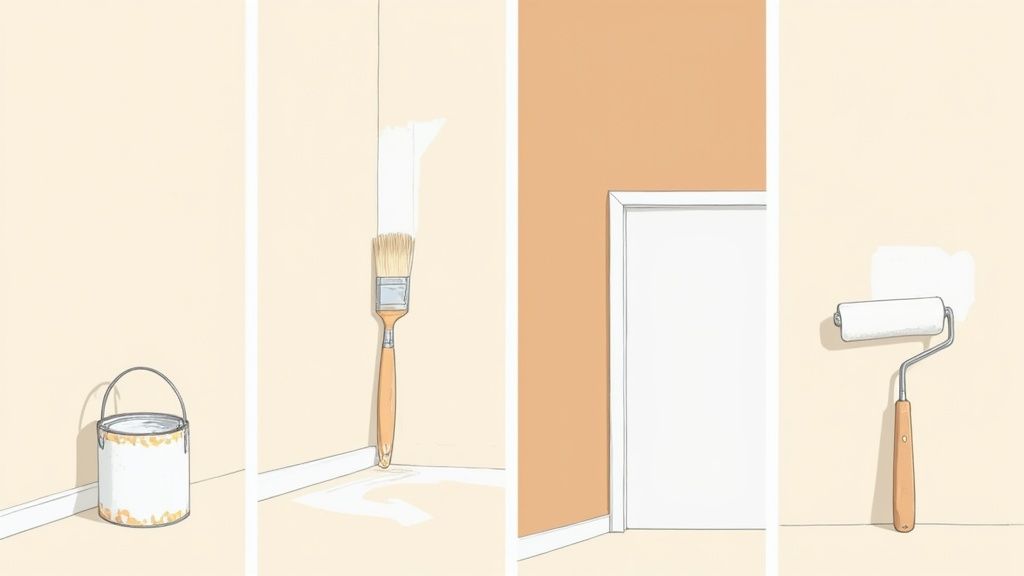
You've found the perfect brown and white paints. Now comes the part that separates an amateur job from a truly professional-looking room. The secret isn't just in the brushing and rolling; it's all about the prep work, the tools you choose, and the order you do things. This is where a little patience creates those razor-sharp lines that make brown walls white trim look so incredible.
They say great painting is 90% preparation and only 10% application, and I couldn't agree more. Don't even think about skipping these steps. Start by giving your walls a good cleaning with a simple soap and water solution to get rid of any dust or grime. Clean walls mean the paint will actually stick.
Next, play detective and scan your surfaces for any dings, dents, or old nail holes. Fill them with spackle, wait for it to dry, and sand it down until it’s perfectly smooth. A flawless canvas is the only way to get a flawless paint job. You can even get a better sense of what needs fixing with this guide on using an AI wall touch up tool.
The Pro Painter's Secret: Order of Operations
There’s a method to the madness that pros swear by because it just works. Always paint from the top down. This simple logic saves you from headaches because any drips or splatters will land on a surface you haven't painted yet.
Paint the Trim First: Start with your white trim. Don't stress about being super neat where it meets the wall—the brown paint will cover any minor slips later.
Move to the Ceiling: Next up is the ceiling. This keeps any stray flicks of ceiling paint off your walls.
Finish with the Walls: Finally, bring in the brown. This is where you’ll carefully "cut in" along the ceiling and the now-dry white trim to create those crisp, clean lines that pull the whole look together.
Trust me, this top-down approach is the most efficient way to work and stops you from having to go back and fix your beautiful new trim.
Priming is not optional, especially with a rich brown. A quality primer ensures your color looks deep and true, with no old paint showing through. It also means you'll use fewer coats of your more expensive paint, saving you money in the long run.
The Right Tools for Crisp, Clean Lines
The tools you use directly impact the quality of your work. For a classic combo like brown walls white trim, getting that clean edge is everything.
For Cutting In: Your new best friend is a 2.5-inch angled sash brush. The angled bristles give you incredible control for painting straight lines along trim, in corners, and up against the ceiling. A cheap brush won't do; a good one holds more paint and gives you a smoother release.
For the Walls: A standard 9-inch roller with a 3/8-inch nap is perfect for most interior walls. This thickness gives you great coverage without leaving a heavy, stippled texture behind.
Painter's Tape: Don't grab the cheapest roll. A quality tape like FrogTape or 3M ScotchBlue is worth every penny. Press it down firmly along the edge of your dry trim before you start on the walls. When the wall paint is still just a little tacky, pull the tape off slowly at a 45-degree angle for a perfect, peel-free line.
Styling Your Room for a Cohesive Look

With the paint finally dry, the real fun begins. This is where you bring the room to life and transform it from just painted walls into a space with personality. A backdrop of brown walls white trim is a wonderfully sophisticated canvas that, believe it or not, works with an incredible range of styles.
The furniture you choose will set the tone. To keep the room feeling bright and modern, I always suggest pieces that offer a gentle, pleasing contrast to the deeper wall color.
Go for light-colored woods. Think ash, maple, or a pale oak. These stop the room from feeling too heavy and introduce a lovely, organic warmth.
Use clean metal accents. Furniture with matte black, brass, or brushed nickel frames adds a crisp, contemporary edge that really pops against the white trim.
Pick your upholstery wisely. Sofas and chairs in lighter shades like cream, beige, or a soft gray provide a much-needed visual break from the rich walls.
Weaving in Color and Texture
Textiles are your secret weapon for layering in personality and softness. A well-chosen rug, the right curtains, or a few throw pillows are what truly tie everything together and make a room feel complete.
Some of my go-to accent colors for brown walls are:
Deep Greens: An emerald or forest green brings in a rich, earthy vibe that feels incredibly luxurious.
Muted Blues: A dusty slate blue or a soft navy can create a wonderfully calming and serene atmosphere.
Soft Creams and Blushes: These tones add a subtle, elegant warmth, keeping the overall palette sophisticated and inviting.
Never underestimate the power of texture. A chunky knit throw, a single velvet pillow, or a natural jute rug adds immense visual interest and makes a room feel so much more comfortable and lived-in.
Window treatments are a crucial finishing touch. After getting your brown walls and white trim just right, learning about enhancing your home decor with quality blinds and curtains is a fantastic next step. And if you're still looking for inspiration, especially for a bedroom, you might find some great ideas in our guide to fresh bedroom color scheme ideas.
Lighting Your Space for Maximum Impact
Good lighting can completely change the mood of a room with brown walls. It’s absolutely essential for highlighting that beautiful contrast with your white trim and keeping the space from feeling dim or cave-like. A layered lighting plan is always the best way to go.
Ambient Lighting: This is your room’s main light source, like a central ceiling fixture or recessed lighting. It sets the base level of light.
Task Lighting: This is your focused light. Think of a floor lamp next to a reading chair or table lamps on end tables.
Accent Lighting: Use this to draw attention to specific features you love, like a piece of art or a beautiful plant. Picture lights or small spotlights are perfect for this.
This combination of brown walls white trim has a fascinating history. While the mid-20th century saw dramatic color shifts, this pairing remained a practical staple in 40% of post-WWII homes. Wartime rationing pushed khaki-like walls into 60% of U.S. tract housing, with a surprising 70% using white trim to maximize brightness during blackouts. By 1950, archives show a 28% increase in these combos as new paint technology created a "true white" that scattered light 50% more effectively.
Answering Your Questions About Brown and White Interiors
Committing to a new color palette is a big deal, so it's only natural to have a few last-minute questions before you dive in. I get asked about styling with brown walls and white trim all the time, so let's walk through some of the most common concerns to get you started on the right foot.
This color scheme is a true classic for a reason, but the magic is always in the details. Getting those small decisions right is what elevates the final look from good to great.
Will Brown Walls Make My Room Look Smaller?
This is probably the number one question I hear, and the answer is: it depends! A deep, rich chocolate brown in a tiny, windowless room can definitely feel a bit tight. But the idea that all brown walls shrink a space is a myth.
It really comes down to the specific shade of brown you pick and how you balance the rest of the room. A lighter, warmer brown—think a soft taupe or a sandy beige—can actually make a room feel more expansive and airy.
Your crisp white trim is the key here. It acts like a picture frame for your walls, creating clean, defined lines that highlight the room's architecture. This contrast provides a visual lift that keeps even darker browns from feeling overwhelming. Pair it with great lighting and lighter furniture, and you'll create a beautiful sense of balance.
What Colors Work Best with Brown Walls and White Trim?
Think of this combination as the perfect neutral canvas. It’s incredibly versatile, giving you the freedom to introduce all sorts of accent colors to set the mood you're after.
If you’re going for a calm, earthy, and grounded vibe, try these:
Soft Greens: Muted sage, olive, or mossy green tones play up the natural, organic feel of the brown.
Muted Blues: A dusty slate blue or a classic navy can bring in a layer of serene sophistication.
Creamy Neutrals: Layering in shades of cream, oatmeal, and warm linen textiles adds a ton of texture and softness.
On the other hand, if you want something a bit more dramatic and luxe, don't be afraid to bring in bold pops of color like a deep burgundy or a striking emerald green. Metallics also look incredible. Brass, bronze, and even matte black hardware and light fixtures really pop against a brown and white backdrop.
How Do I Choose the Right White Paint for My Trim?
This is a fantastic question because, believe it or not, not all whites are the same. The perfect white for your trim is always dictated by the undertone of your brown wall color.
For a brown with warm, reddish, or yellow undertones, you'll want a white that leans a bit warm, too. A creamy, soft off-white like Benjamin Moore's White Dove will create a gentle, harmonious flow. But if you're using a cooler brown that has more gray or taupe in it, a cleaner, crisper white like Sherwin-Williams' Pure White will provide a sharp, modern contrast.
My best advice? Always, always test your samples together. Paint a swatch of your brown right next to a swatch of your potential white on the actual wall. Watch how they interact throughout the day as the light changes. It’s the only surefire way to know you’ve found the perfect match.
Tired of guessing? You can see exactly how different brown and white paint combinations will look in your own space with Decor8 AI. Just upload a photo of your room and instantly test out hundreds of shades. Find your perfect pairing before you even open a can of paint. Try it for free at Decor8 AI.
Comments