
Virtual Staging AI and How It Transforms Empty Rooms
Ever tried to sell an empty house? It’s a tough sell. Blank walls and bare floors can feel sterile and unwelcoming, leaving potential buyers struggling to see themselves living there. They can't quite figure out if their couch will fit or how the space could actually feel like a home.
That's where virtual staging AI comes in.
What Is Virtual Staging AI and Why Is It a Game Changer?
Think of virtual staging AI as your own personal, high-speed interior designer. Instead of the back-breaking work of hauling in physical furniture, you just upload a photo of an empty room. The AI Virtual Staging gets to work, analyzing the room’s layout, lighting, and angles to digitally add beautifully staged, photorealistic furniture and decor in a matter of seconds.
It's all about helping buyers see a property's true potential without the time and expense of traditional staging.
Bridging the Imagination Gap
At its core, the goal is to help a buyer see a house as a home. And it works. A whopping 83% of buyers' agents say staging makes it far easier for their clients to picture themselves in a property. An empty room is just a box; a staged room tells a story and sparks an emotional connection.
This isn't just a neat trick; it represents a major shift in how we market real estate. It directly solves some of the biggest headaches for agents and sellers:
It’s Way Cheaper: Physical staging costs can easily run into the thousands. Virtual staging is a fraction of that price.
It’s Incredibly Fast: You can get stunningly staged photos back in minutes, not days. That means your listing goes live sooner.
It’s Flexible: Want to appeal to a younger buyer with a modern vibe? Click. Need a more traditional look for a different audience? Click. You can tailor the style instantly.
It's for Everyone: High-end AI Home Design used to be reserved for luxury listings. Now, any property can look its absolute best online.
By transforming a cold, empty space into a warm, inviting scene, virtual staging AI creates an immediate emotional connection that can significantly influence a buyer's decision.
This gives agents a serious edge in today's crowded market. You can showcase every single listing in its best light, grabbing more attention online and helping properties sell faster. To get a better sense of how this works behind the scenes, take a look at our complete guide to AI Interior Design. Being able to create aspirational images this quickly is what truly makes this technology a game changer.
How Does AI Virtual Staging Actually Work?
So, how does an empty room turn into a stunning, fully furnished space in just a few clicks? The tech behind virtual staging AI can sound pretty complex, but the idea behind it is actually quite simple. The best way to think about it is to imagine the AI as an incredibly experienced interior designer—one who has studied millions of photos to learn exactly what makes a room feel stylish, balanced, and inviting.
This "designer" doesn't work with mood boards and fabric swatches, though. It uses powerful algorithms known as generative models. When you give it a photo of an empty room, the AI Virtual Staging starts its work, breaking the project down into a few clear steps. It’s not magic; it’s just a very smart, data-driven process that anyone can kickstart.
The Three Core Steps of AI Staging
From the moment you upload a photo to getting back a finished image, the whole thing really boils down to three main phases. Each step builds on the one before it, making sure the final result is not just beautiful but also believable.
Scene Analysis and Understanding: First, the AI acts like a digital architect. It takes a hard look at your photo to figure out the room's basic layout—identifying the walls, floor, and ceiling, measuring the space, and mapping out the perspective. Most importantly, it detects the light sources. It notes where the windows are and how the natural light creates shadows, which is crucial for making the new furniture look like it's really there.
Generative Design and Placement: With the "canvas" understood, the fun part begins. You pick a style—say, "Modern," "Coastal," or "Farmhouse"—and the AI dives into its massive digital warehouse of furniture and decor. It doesn’t just plop a sofa down randomly. It intelligently selects pieces that fit the room's scale and your chosen style. This AI Room Design stage is all about composing a scene, carefully placing each item to create a layout that feels natural and makes sense.
Photorealistic Rendering and Refinement: This is the final touch, where everything comes to life. The AI renders the furniture into your photo, adding realistic shadows and reflections that match the room's original lighting. You'll see soft light from a window hitting the arm of a chair, or a subtle reflection on a polished hardwood floor. The system keeps tweaking these tiny details until the digital items blend perfectly with the real-world photo.
At its heart, virtual staging AI is a powerful combination of spatial recognition, creative generation, and photorealistic rendering. It translates the logic of interior design into a fast, automated process.
You're Still in the Driver's Seat
This isn't a hands-off process where you just hope for the best. Good platforms let you guide the AI's creative vision. You can specify the room type, choose from dozens of curated styles, and even use text prompts to get more specific with the decor. This back-and-forth makes the technology easy to use and helps you get a final image that lines up perfectly with what you had in mind.
This technology isn't just a cool gimmick; it's a real shift in the market. The Global Virtual Staging Software market is projected to grow at a compound annual rate of 10.5%, which shows just how many people are jumping on board. This is all part of a much bigger trend, with the augmented and virtual reality market in North America alone expected to hit a massive $39.96 billion by 2030.
The same kind of generative AI that powers this is making huge waves elsewhere, too. To get a feel for its broader impact, it’s interesting to check out the best AI video generators that are changing how visual content is made across the board.
Once you understand the process, the tech doesn't seem so intimidating. It shows you don't need a design degree or a technical background to get professional-looking results. To see how our platform handles these steps, you can read more about how Decor8's AI virtual staging works. By providing a photo and a style preference, you’re basically hiring a team of digital designers who work at lightning speed.
Comparing AI Staging with Traditional Methods
When you're prepping a property for sale, the mission is simple: make it look incredible. For years, that meant one thing—traditional physical staging. This was a whole production, involving rental furniture, movers, and a serious hit to your budget and timeline. But today, virtual staging AI offers a smarter way forward, outperforming the old methods on every front.
Let’s picture two identical listings. The first one goes the old-school route. The agent spends days juggling calls with a staging company, picking out sofas, and waiting for the moving truck. The bill easily runs into the thousands. And if a potential buyer hates that mid-century modern vibe? Too bad.
Now, consider the second listing. The agent snaps a few photos of the empty rooms, uploads them to an AI virtual staging tool, and clicks "Modern Farmhouse." In a matter of minutes, they get back a set of stunningly furnished images. The cost is a tiny fraction of the first listing, and the property hits the market the same day. This contrast gets right to the heart of the matter: cost, speed, and flexibility.
The Decisive Factors: Cost and Speed
The biggest and most obvious differences come down to time and money. Traditional staging isn't just a service; it's a major logistical operation with a price tag to match.
Cost: Physically staging a home can run you anywhere from $500 to over $5,000, depending on the size of the house and how long you need the furniture. AI staging, on the other hand, usually costs between $10 and $200 for the entire property. This makes it a no-brainer for every single listing, not just the luxury ones.
Speed: Getting a home physically staged can take anywhere from one to three weeks when you factor in consultations, delivery, and the final photoshoot. With AI, the whole thing is done in minutes or, at most, a few hours. You can get a listing live before you’ve even had your afternoon coffee.
Traditional staging is like commissioning a custom painting; it's slow, expensive, and you get one final version. AI staging is like having a digital art studio at your fingertips, offering endless creative options on demand.
The AI process is refreshingly simple. This flow chart breaks down just how quickly an empty room can become a buyer's dream.
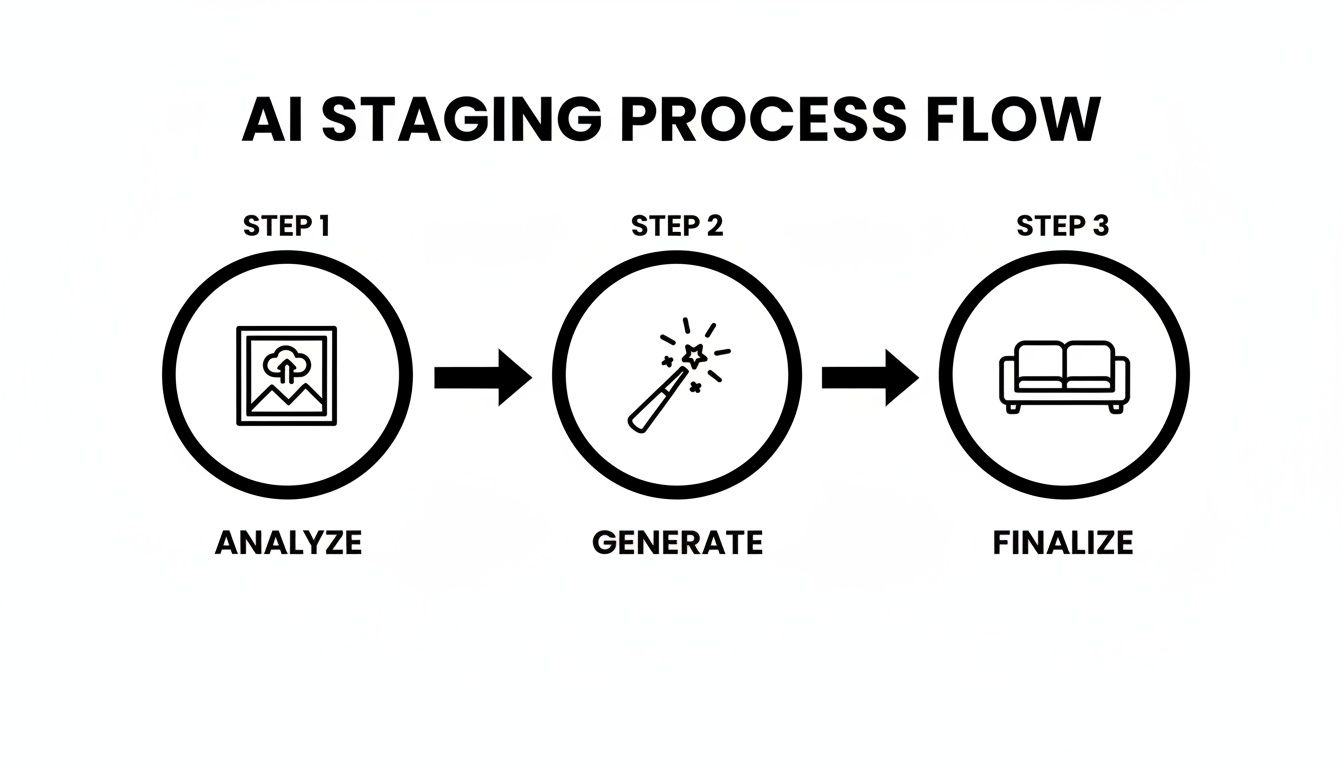
This three-step workflow—analyze the photo, generate the design, and finalize the image—is the engine behind its incredible speed.
To really see the difference, let's put them side-by-side.
AI Virtual Staging vs Traditional Staging: A Head-to-Head Comparison
This table breaks down the fundamental differences between using AI-powered virtual staging and traditional physical staging across key decision-making factors for real estate professionals and homeowners.
Feature | AI Virtual Staging | Traditional Staging |
|---|---|---|
Cost | $10 - $200 per property. Extremely low cost. | $500 - $5,000+ per month, plus potential consultation fees. |
Turnaround | Minutes to hours. Images are ready almost instantly. | 1-3 weeks. Involves scheduling, delivery, setup, and photography. |
Flexibility | Infinite. Change styles, furniture, and layouts with a few clicks. | Zero. Once the furniture is in, it’s set. Changes are costly and slow. |
Convenience | Fully remote. Upload photos from anywhere, anytime. | Logistically complex. Requires on-site coordination, access, and supervision. |
ROI | Extremely high. A small investment for a massive impact on listing appeal. | Variable. Can be effective, but high costs can eat into profit margins. |
Scalability | Effortless. Stage one room or an entire portfolio of properties just as easily. | Limited. Each property is a separate, time-consuming project. |
The comparison makes it pretty clear. While traditional staging has its place, AI offers an agility and cost-effectiveness that’s hard to ignore in today’s market.
Unmatched Flexibility and Creative Control
Beyond the sheer practicality of cost and speed, AI Interior Design platforms give you creative freedom that physical furniture just can't match. You can tailor your marketing to specific buyer tastes with almost zero effort.
Think a property will appeal to a younger, modern buyer? Generate a sleek, minimalist design. Have a hunch that a family might prefer a cozy, traditional feel? You can create a totally different set of images in seconds. This kind of adaptability means your listing photos will connect with the widest possible audience.
AI also solves tricky problems that give physical stagers headaches. For example, what if the seller is still living in the home with cluttered or dated furniture? AI tools can digitally clear the room first. You can learn more about how AI-powered furniture removal creates a perfect blank canvas before adding new, stylish decor. It’s a game-changer for occupied homes.
In the end, it really comes down to efficiency. While physical staging set the standard for decades, modern AI home design tools deliver a smarter, faster, and far more cost-effective solution for today's real estate world. The power to produce high-quality, customized visuals almost instantly is a massive competitive advantage.
Real-World Applications That Drive Results
The real test of any new tool isn't the hype—it's the results it delivers on the ground. This is where virtual staging AI really proves its worth. It’s not just a cool piece of tech; it’s a powerful marketing engine that turns empty spaces into profitable sales.
Whether you're listing a high-rise condo or a suburban family home, the goal is the same: help buyers fall in love with the property. Instead of showing them four empty walls and asking them to use their imagination, you can present a vibrant, fully-furnished vision of what their life could look like. It’s a simple but profound shift from showing what is to what could be.
And let's be clear: this isn’t just about making listings look prettier. It’s a smart business move that directly impacts your bottom line.
Marketing Unfinished and Vacant Properties
Selling a new construction from a floor plan or marketing a vacant home is one of the toughest gigs in real estate. How do you get a buyer excited about a dusty, empty shell? AI Home Design bridges that gap by creating stunningly realistic renderings of a finished, furnished home. It turns a blueprint into a dream home.
The same goes for an empty resale property. Online, it can feel cold, stark, and hard to connect with. Virtual staging AI instantly adds warmth, context, and a sense of scale. It shows potential buyers that a living room can be cozy or that a small bedroom can still be perfectly functional. This is a game-changer, especially for out-of-town buyers who are making their first cut based solely on online photos.
At its core, real estate marketing is about selling an idea. By using AI Home Décor to furnish these blank canvases, you create an emotional connection that empty photos just can't compete with.
Decluttering and Modernizing Occupied Homes
But what about properties that are still lived in? Many homes on the market are filled with personal clutter, dated furniture, or a style that just won't click with most buyers. Asking a seller to move out or completely refurnish their home simply isn't realistic.
This is where AI offers an elegant fix. An AI virtual staging tool can digitally remove the existing furniture and replace it with modern, neutral designs that appeal to a much wider audience. This simple step accomplishes two huge goals:
Depersonalization: It removes the seller’s personal taste from the equation, making it easier for buyers to envision their own life and belongings in the space.
Modernization: It swaps out tired décor for fresh, stylish furnishings that make the home’s best features pop.
This digital makeover can give a property’s online presence a massive boost without the seller having to lift a single box. Learning how to leverage this is a huge advantage for agents, and our guide on virtual staging for realtors dives deeper into these strategies.
"The goal is to create a universally appealing vision. By digitally clearing clutter and adding modern décor, you invite buyers to see the home's potential, not the seller's personal taste."
The return on this small digital investment is huge. Data from a leading platform shows that listings using AI staging see a 72% increase in online traffic. More eyes on the listing lead to a 44% jump in qualified inquiries. The results speak for themselves: properties spend up to 36% less time on the market and can sell for up to 22% more than their non-staged counterparts.
How to Choose the Right AI Staging Solution
With so many virtual staging AI tools popping up, trying to pick the right one can make your head spin. They all promise the same thing—beautiful images, fast turnarounds, and low costs—but the reality is that quality can be all over the map. Choosing a platform isn't just about finding the cheapest option; it's about finding a partner that delivers consistently believable results that actually help sell your properties.
To make a good choice, you have to look past the flashy marketing and focus on what really matters for your listings. The best solution will hit that sweet spot between photorealism, design variety, and ease of use. Think of it like hiring a digital designer: you need someone reliable, talented, and easy to work with.
Key Criteria for Evaluating AI Staging Platforms
When you start comparing options, it’s best to zero in on a few core pillars. These are the things that separate a basic, gimmicky tool from a professional-grade platform that can genuinely elevate your marketing.
Photorealism and Image Quality This is the big one. If the images look fake, you’ve lost before you’ve even started. The whole point is to help buyers imagine themselves in the space, not get distracted by weird digital artifacts. Look closely at sample images. Do the shadows look natural? Are the reflections on the floors and windows believable? An AI that nails lighting and scale is one that produces images that feel authentic and inviting.
Variety and Quality of Design Styles A one-size-fits-all approach doesn't work in real estate. A great AI Interior Design platform gives you a whole catalog of tasteful, relevant styles to choose from. You should be able to pick "Modern Farmhouse" for a suburban home and "Industrial" for a downtown loft to match the property and the likely buyer. The quality of the virtual furniture library is just as important—the pieces should look high-end and cohesive, not like they were pulled from a 90s video game.
Ease of Use and Workflow The most powerful tool in the world is useless if it's a pain to use. A clunky interface or a confusing process completely defeats the purpose of using AI for speed and convenience. Look for a platform with a simple, intuitive workflow: easy photo uploads, clear style options, and quick processing times. The ability to make small tweaks or try out different looks without having to start from scratch is a huge plus.
"The most effective virtual staging AI doesn't just add furniture to a room—it adds a story. The realism of the lighting, the appropriateness of the style, and the overall quality of the image must be convincing enough to create an emotional connection with the buyer."
Advanced Features to Look For
Once you've covered the basics, a few advanced features can really set a platform apart. These capabilities show that a company truly understands what real estate pros need to get the job done.
For example, it's one thing to stage an empty room, but what about a cluttered one? This is where some platforms really shine. For a deeper look at how this works, providers like Decor8 AI offer solutions for virtual staging empty rooms that also include furniture removal and replacement—an absolute must for occupied listings.
Here are a few other high-value features to keep an eye out for:
Furniture and Clutter Removal: The power to digitally empty a room before staging it is a game-changer, especially for sellers who are still living in the home.
Customization Options: Can you give the AI text prompts to refine the decor, like asking for a specific color palette or a different type of art? That level of control helps you get the exact look you're after.
API and Integrations: For larger agencies or tech-forward brokerages, an API lets you plug the AI virtual staging service right into your own website or internal systems.
High-Resolution Downloads: Make sure the platform lets you download images that are sharp enough for print brochures and flyers, not just for online listings.
To get a better sense of how AI is shaking up the industry, it’s worth checking out some of the best AI tools for real estate professionals. By carefully weighing these criteria, you can find an AI home design solution that doesn’t just create pretty pictures but becomes a reliable and powerful part of your marketing toolkit.
The Future of Property Marketing is Already Here
Let's be clear: virtual staging AI isn't some far-off, sci-fi concept anymore. It's a real tool that top agents and developers are using right now to completely change how they market properties. It’s gone from being a cool gimmick to an essential part of the toolkit, giving savvy professionals a serious edge in a crowded market.
Adopting this isn't just about following the latest fad; it's a smart business move. AI is making just about every industry more efficient, and real estate is no exception. We've seen how this technology offers a faster, cheaper, and unbelievably flexible way to stage a home, ensuring every single property can look its absolute best.
AI is No Longer Optional
This shift toward smarter, automated tools is happening across the board. A recent McKinsey study found that AI adoption in businesses jumped to a whopping 72% in 2024, way up from around 50% in the years before. For real estate, this means AI Virtual Staging can plug directly into your CRM and marketing platforms, creating a smooth, time-saving workflow. It’s no wonder 72% of executives are convinced AI will be a game-changer for their teams. You can dig into more of these stats and what they mean for businesses in this breakdown of AI trends.
The question isn't if you should start using AI in your real estate marketing. It's how fast you can get it working for you to see a real impact. The future isn't on its way—it’s here, and the people who jumped on it early are already ahead.
Your Secret Weapon in a Crowded Market
At the end of the day, selling a home is about making an emotional connection. You need to get buyers to see themselves living there, and that’s exactly what AI Home Design helps you do. It gives you the power to tell a visual story that grabs attention online, making your listings the ones that people stop scrolling for. You're turning cold, empty photos into warm, inviting visions of what a home could be.
The path forward is pretty simple. When you build virtual staging AI into your marketing, you stop selling just a property and start selling a dream. You get stunning visuals that attract better-qualified buyers and help you close deals faster. Don't get left behind. It's time to put this technology to work and build a more successful business.
Got Questions? We’ve Got Answers
Even after seeing all the benefits, it's natural to have a few practical questions about how AI Interior Design works in the real world. We get it. You want to be sure before you dive in.
Let's walk through some of the most common questions agents and homeowners ask. Our goal is to clear up any lingering doubts so you can feel totally confident using this tool to make your properties shine.
Just How Real Do These AI-Staged Photos Look?
This is the big one, right? And the honest answer is: it really depends on the AI you're using. The best tools out there create images that are practically indistinguishable from a professionally shot, physically staged room.
The secret sauce is an AI that truly understands things like spatial depth, how light bounces around a room, and where shadows should naturally fall. When it's done well, the realism is uncanny and helps buyers form that all-important emotional connection to the space.
Can I Actually Put These on the MLS?
Absolutely. Virtually staged photos are a common sight on the Multiple Listing Service (MLS) all over the country. There's just one golden rule you have to follow: disclosure.
Almost every MLS board requires you to clearly label the photos as "virtually staged" or note that they've been digitally enhanced. This simple act of transparency makes sure everyone knows they're looking at the home's potential, not its current state.
Honesty is always the best policy here. Clearly labeling your images builds trust with buyers from the get-go and keeps you in line with MLS rules.
Won't Buyers Feel Fooled When They Tour an Empty House?
This is a valid concern, but it's rarely a problem if you handle it upfront. By clearly stating the photos are virtually staged and maybe even including a couple of "before" shots of the empty rooms, you manage expectations perfectly.
Most buyers are savvy. They appreciate seeing a home's potential and understand that staging is a marketing tool to help them imagine themselves living there. The goal of AI Room Design is to inspire, not to deceive.
What's This Going to Cost Me?
Here’s where AI staging really pulls ahead. Physical staging can easily set you back thousands of dollars. In contrast, AI virtual staging usually costs anywhere from a few dollars to about $20 per image.
Many services also offer subscription packages that drop the per-image price even lower. This makes it a no-brainer to stage every single listing you have, not just the high-end ones. It’s a small investment that pays off big by pulling in more online views and, ultimately, more offers.
Ready to see it in action? With Decor8 AI, you can take your empty room photos and turn them into stunning, professionally staged masterpieces in just a few minutes. Start your free trial at Decor8 AI and discover how simple it is to make every property look its absolute best.
Comments